Event 1
Closure of the Buell steel mill
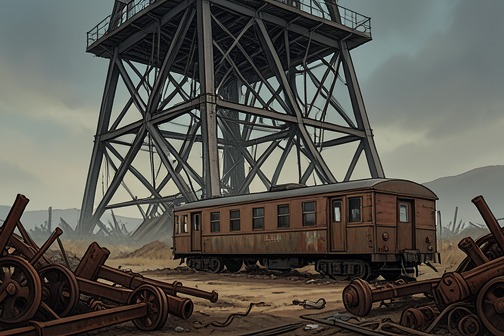
The [Closure of the Buell steel mill](entity:event-recall-event-buell-f0c30f24ebc6) is the decisive break between the town’s industrial past and its postindustrial present. The mill had once functioned like a small city; after it shut in [1987](entity:time-recall-time-1987-2a77483a819d), its disappearance reached far beyond the plant gates, unsettling work, family plans, municipal services, and the meaning of staying in [Buell](entity:location-recall-location-buell-dd1b10e7bf85). The novel presents the closure not as a single dramatic scene but as a long aftermath: a source of livelihoods removed, a network of industries weakened, and a landscape slowly changing around the remains.
## The mill and the industrial system
For roughly a century, [the Mon](entity:location-recall-location-4a6bc91fd1c8) Valley had been a center of steel production in the United States and, in a broader sense, the world. Coal supplied the steel industry, while dozens of smaller businesses—including tool-and-die shops, specialty coaters, and mining-equipment makers—served the mills and depended on their continued operation. Steel was the system’s heart. When the mills closed, the connected industries and the communities built around them lost their economic foundation as well.
The scale of that rupture is measured across the lifetimes of [Isaac English](entity:character-recall-character-isaac-english-4666b5358751) and [Billy Poe](entity:character-recall-character-billy-poe-3764007934c2): since they were born, the area had lost 150,000 jobs. The novel notes that many towns could no longer afford basic services, and some had lost their police departments. A local account of residents turning to welfare or hunting and gathering is acknowledged as an exaggeration, but one close enough to convey how thoroughly ordinary economic life had been disrupted. The closure therefore belongs to a regional history, not simply the story of one factory.
## Shutdown and physical disappearance
The mill’s closure in 1987 began an extended physical retreat. About ten years later, part of the plant had been dismantled, and much of the complex stood abandoned. From an overlook, Isaac sees buildings overtaken by bittersweet vine, devil’s tear thumb, and tree of heaven. [Deer](entity:creature-recall-creature-deer-122a246e014a) and coyote tracks cross the grounds; human presence is reduced to the occasional squatter. The former industrial city has become a ruin in which nonhuman life is more visible than the workers who once filled it.
The dismantling continued in stages. [Grace Poe](entity:character-recall-character-grace-poe-38cb7d239774) remembers residents gathering to watch the demolition of Dorothy Five and Six, two nearly new blast furnaces, each about two hundred feet tall. They were brought down with dynamite. The spectacle made industrial contraction physically legible: structures once built to dominate the landscape were deliberately toppled, while no comparable investment arrived to replace the work or restore the town. [Grace](entity:character-recall-character-grace-f21f0fdf609d) connects the image to another distant act of destruction, not because the events were equivalent, but because both made clear that some places and people received far more attention than others.
## Work, family, and constrained choices
The shutdown’s effects enter the novel through work histories and family decisions. At eighteen, Grace came home from high-school graduation to find a new car and a book of pay stubs; her father had already arranged for her to start at Penn Steel. She worked on the rolling line, where she met [Virgil Poe](entity:character-recall-character-virgil-poe-771fcb92b426). After becoming pregnant, she married him and began college, carrying her baby with her while she studied. She was close to completing an associate degree when layoffs ended that possibility.
[Virgil](entity:character-recall-character-virgil-639f3194e232) survived several rounds of layoffs before his seniority proved insufficient. In the years when mill jobs disappeared across the region, waiting for the plants to reopen brought no relief: closures continued, and work became scarce. The loss of Grace’s schooling and the insecurity of the family’s employment are not presented as individual failures. They follow from an economy in which the work that had once supported a household vanished faster than other opportunities appeared.
The family’s housing and food were also bound to the region’s shrinking prospects. After the trailer went into foreclosure, residents protested sheriff’s sales; the conflict culminated in a judge’s moratorium that became law, allowing families such as Grace and Virgil’s to keep their homes. They relied on food-bank supplies and deer Virgil poached. His later job training in robotics did not lead to the promised jobs, and a subsequent position at a barge-making plant ended when that plant closed too. Leaving was no simple remedy: migration required money, and many who went elsewhere eventually returned. The novel shows how the closure narrowed choices without making departure or staying easy.
## Continuing costs and environmental inheritance
The mill’s legacy persists in both civic weakness and the industrial landscape. Buell faces crumbling infrastructure and a sewage system that spills into the [Monongahela River](entity:location-recall-location-monongahela-river-5e55ebc53cb1) during heavy storms. The police department’s budget is cut from $785,000 to $541,000, forcing layoffs and leaving a small force responsible for problems that the narrative connects to unstable work and declining resources. [Bud Harris](entity:character-recall-character-bud-harris-4c14453c3d06) understands that police cannot repair the social conditions that produce crime; the town’s shrinking capacity is part of a much larger economic failure.
Industry remains visible beyond the abandoned mill. Isaac passes coal facilities, power stations, and loaded railcars along the river. At the [Clairton coke works](entity:location-recall-location-0486d209156e), a vast plant and its smokestacks dominate the view, while the river carries the accumulated residue of industrial use. The water may appear open and natural, but Isaac knows that coal, industrial waste, and contaminants remain part of its history. The novel does not treat nature’s return to the Buell mill grounds as a simple restoration: vegetation and animal tracks occupy the ruins, yet the region still bears the environmental and economic costs of the industrial order.
## Historical meaning
The closure is also set against choices made by steel companies and public institutions. [Henry English](entity:character-recall-character-henry-english-5a7ad5f8adc5) recalls that Penn Steel had failed to invest in its factories for years, while German and Japanese producers had continued modernizing their plants. In his account, weak investment helped make decline inevitable; blaming labor costs alone obscures the different decisions that shaped the industry’s future. The contrast places responsibility not only on workers and families forced to adapt, but also on the companies that allowed their facilities to deteriorate.
By joining the mill’s physical ruin to Grace’s interrupted education, Virgil’s successive job losses, and Buell’s contracting public budget, the novel makes industrial closure an ongoing condition rather than a completed event. The blast furnaces can be demolished and the buildings reclaimed by plants, but neither act restores the lives and institutions organized around steel. What remains is a town negotiating the consequences of a transformation it did not control, with memory, local attachment, and limited prospects all shaped by the absence of the work that once held the region together.
Event 2
Fayette County foreclosure protest
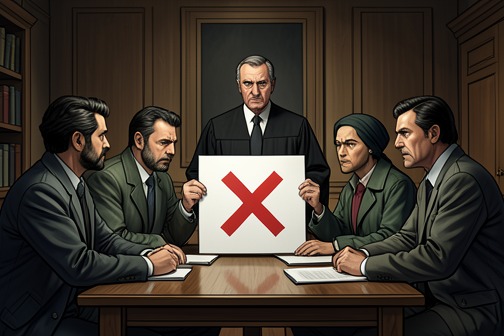
The [Fayette County foreclosure protest](entity:event-recall-event-41602cacc85a) was a community resistance to home seizures during [the Mon](entity:location-recall-location-4a6bc91fd1c8) Valley’s economic collapse. It helped halt foreclosure sales through a judge’s moratorium, later made law, and enabled [Grace](entity:character-recall-character-grace-f21f0fdf609d) and [Virgil](entity:character-recall-character-virgil-639f3194e232) to remain in their trailer; keeping their home, however, did not free them from poverty.
## Causes and Conditions
The protest grew out of layoffs and closures that left families without reliable work. Grace remembered the mills repeatedly laying workers off and then closing, while she had to abandon her education and Virgil lost his job after surviving several rounds of layoffs. The surrounding hardship was visible in stories of neighbors losing their homes and families, and in the repeated uncertainty over whether there was anywhere else to go.
Their own trailer had entered foreclosure. For families like Grace and Virgil’s, the prospect of losing a home came amid scarce employment and few resources with which to start over elsewhere. The conflict was therefore not simply over a sheriff’s sale: it concerned whether residents could remain rooted in a place whose industrial economy had ceased to provide them with a living.
## Protest and Moratorium
Residents began picketing sheriff’s sales, with deer rifles kept in their cars. When a banker came to insist that the sheriff act, the protest turned more confrontational: the crowd overturned his Cadillac and set it on fire. The account presents this escalation as part of a collective effort to resist foreclosures and prevent the crisis from ending in further violence.
To keep people from being shot, a judge imposed a moratorium on foreclosures. The measure eventually became law. The immediate result was that Grace and Virgil managed to keep their trailer, turning local protest into a legal pause on the sales that threatened residents’ homes.
## Aftermath and Significance
Keeping the trailer did not restore the work that had disappeared. Grace and Virgil lived on food-bank supplies and deer that Virgil poached; for two years, venison was nearly all they ate, leaving Grace unable to stand its taste. The moratorium preserved a home, but the family’s survival still depended on aid and hunting rather than secure employment.
Grace’s recollection places the protest within the larger dilemma of staying in the Valley or leaving. People went to Houston, New Jersey, and Virginia for work, sometimes living several to a motel room and sending money back; many returned. For Grace, remaining among familiar people could be better than being poor somewhere else. The protest’s outcome thus secured a precarious form of belonging, not an escape from the economic conditions that had made foreclosure possible.
Event 3
Suicide of Isaac and Lee’s mother

[Mary English](entity:character-recall-character-mary-english-7cbedb900f60)’s suicide by drowning shapes the family’s grief and becomes an intimate point of reference in Isaac’s own confrontation with death. Recalled through his thoughts rather than presented as a continuous scene, her last walk and the recovery of her body remain bound to his sense that he failed to recognize what was happening.
## Last Sight and Unanswered Warning
Isaac remembers watching [Mary](entity:character-recall-character-mary-ea333e3cde9f) walk down the driveway on what seemed an ordinary, pleasant day. He had gone upstairs to read Time magazine; seeing her leave struck him as out of place, but he found no reason to follow. Later, that small moment becomes a source of counterfactual guilt: he wonders whether he could have chased after her, even as he recognizes that nothing in the scene had plainly signaled an emergency. He recalls it as the last time he saw her, and allows that it may have been the last time anyone did.
The memory holds two impressions together without resolving them. Mary seemed happier than Isaac had seen her in some time, yet he also remembers the walk as strangely out of place. His later knowledge turns an ordinary departure into a possible warning, but his recollection cannot establish what she intended or whether anyone could have intervened.
## The River and the Circumstances of Death
Isaac’s thoughts connect Mary’s death to the river in winter. Remembering how cold the water was during his own February crisis, he imagines that Mary entered it in similarly numbing conditions. He recalls that her body remained submerged for less than two weeks and that she had put several pounds of rocks in her pockets. The detail gives the death a stark physical specificity, but the novel presents it as a memory that Isaac carries, not as an extended account of her final moments.
The river returns in Isaac’s mind as both a place of death and a material process that outlasts individual lives. He imagines a drowned body being found at a lock, then turns from that possibility to the matter of what becomes of the body: water, carbon, atoms, and particles returning to the planet. Against that impersonal continuity, Mary’s absence remains particular—a loss Isaac is still trying to comprehend years later.
## Memory, Guilt, and Repetition
Mary’s death recurs when Isaac contemplates his own exposure to the cold river. He recognizes a resemblance between his suicidal thinking and the circumstances he associates with her death, but the recollection also marks a difference: he remembers Poe pulling him from the water. The mother’s death therefore returns within Isaac’s own near-drowning not as an explanation for his actions, but as part of the memory through which he tries to understand them.
His self-reproach extends beyond the question of whether he should have followed Mary. Isaac thinks that she lived for herself and frames her death as a choice, then turns the same judgment against the people closest to him and against his own expectations of them. These harsh conclusions do not settle his grief; they show how the loss has become entangled with his judgments about care, responsibility, and what people owe one another.
## A Contested Family Account
The family does not hold a single account of Mary’s death. Isaac remembers it as suicide, while Henry tells others that she was pushed and calls the death an uninvestigated murder. The novel offers this accusation as Henry’s belief, not as proof that Mary was killed. The gap between the accounts leaves the circumstances disputed within the family even as Isaac’s memories of her departure and the rocks in her pockets point toward suicide.
That unresolved tension makes Mary’s death more than a past tragedy: it is a story the survivors continue to interpret, and one Isaac carries into his own crisis. His memories move between concrete details—the driveway, the magazine, the winter water—and thoughts about mortality on a scale no individual life can contain. The loss remains emotionally immediate even when he tries to reduce it to facts about bodies and matter.
Event 4
Isaac falls through the river ice
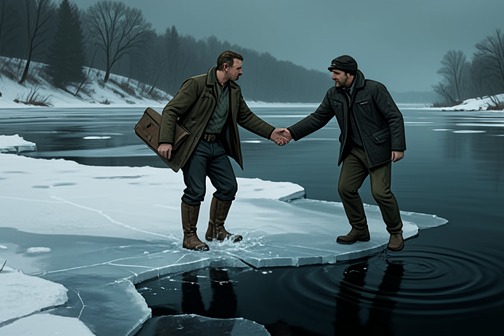
[Isaac English](entity:character-recall-character-isaac-english-4666b5358751)’s fall through [the Mon](entity:location-recall-location-4a6bc91fd1c8) River ice is a near-drowning that becomes a measure of the bond between Isaac and [Billy Poe](entity:character-recall-character-billy-poe-3764007934c2): Poe once pulled Isaac from the water, and, when their positions later reverse, Poe understands Isaac’s rescue of him as a repayment. The episode also recalls the suicidal death of Isaac’s mother, giving the frozen river a personal and dangerous weight beyond the physical accident.
## Circumstances and Recollection
The fall occurred about two months before Poe’s later recollection, when the river was frozen over with skim ice. Isaac looked at Poe, dared himself, and stepped off the rocks. He managed only a few steps before the ice gave way and he disappeared into the water. The brief sequence turns on a sudden reversal: what looks like a dare becomes an emergency before Poe has time to respond.
The novel also approaches the event through Isaac’s inward association with his mother’s death. In that passage, the February water is painfully cold, and Isaac recalls remaining in it until the pain stopped. He connects that sensation to the way his mother slipped beneath the surface, and imagines how cold can suppress what lives in the river without preventing it from eventually rising. The association makes the ice incident more than a physical hazard: it places Isaac’s own exposure to the water beside the death that haunts him, without reducing the episode to a fully explained intention.
## Poe’s Rescue
Poe panicked briefly, then jumped into the river after Isaac. He crashed through the broken, shifting ice and dragged Isaac out. Both were soaked and nearly frozen to death. The rescue is presented as an immediate bodily act rather than a considered decision: Poe moves from alarm to action, entering the same dangerous water that has swallowed his friend.
Isaac later told Poe that he had only wanted to see what it felt like, describing the plunge as a simple experiment. That explanation does not erase the danger of the act. Isaac had stayed in the water through severe cold, and his thoughts connect the experience with his mother’s fatal immersion; at the same time, the account does not settle his motive as a deliberate attempt to die.
## Reciprocity and Significance
When Poe later thinks back on the incident, he sets it beside the moment Isaac saves him. He sees an equivalence: Poe had saved Isaac from the river, and now Isaac has saved Poe. For Poe, the recurrence gives the two rescues a sense of purpose and makes their friendship legible through exchanged acts of protection. The earlier rescue therefore changes in significance when it is remembered: what first appeared to be a reckless, isolated emergency becomes one half of a reciprocal bond.
The episode also links personal memory to the river’s physical layers. Isaac imagines mud concealing old debris and bones, while cold holds back the things that live beneath the surface only temporarily. The ice similarly appears to offer a boundary but fails under Isaac’s weight; the river hides him, and Poe’s intervention brings him back into reach. In the novel’s later recollection, the fall is both a concrete near-drowning and an image of how danger, grief, and loyalty return in altered form.
Event 5
Machine-shop assault and Otto’s death
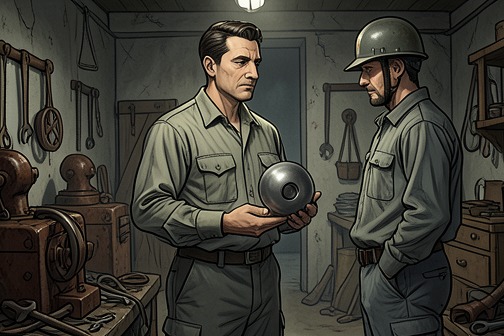
[Machine-shop assault and Otto’s death](entity:event-recall-event-otto-a9278636f325) is the fatal confrontation in which [Isaac English](entity:character-recall-character-isaac-english-4666b5358751), returning to help [Billy Poe](entity:character-recall-character-billy-poe-3764007934c2), strikes [Otto the Swede](entity:character-recall-character-otto-the-swede-9e233681147d) with a heavy ball bearing. Isaac’s intervention interrupts the threat against Poe, but the killing transforms their attempted escape into a lasting moral and legal crisis. The scene makes a scrap of the Valley’s industrial past into a weapon, and leaves Isaac with a responsibility he cannot simply transfer to his friend.
## Causes and Setting
The confrontation takes place in an abandoned machine shop, amid the remains of an industrial economy that once sustained the surrounding communities. For a century, the Valley had been a center of steel production; by the time Isaac and Poe were born, it had lost 150,000 jobs. The closures had damaged not only the mills but the network of smaller industries that depended on them. Many towns could no longer afford basic services, and some had lost their police forces. The scale of that collapse forms the event’s social background, though the evidence does not reduce the men’s violence to economic hardship alone.
The consequences of industrial decline appear in the characters’ family histories as well as in the ruined workplace. [Grace Poe](entity:character-recall-character-grace-poe-38cb7d239774) recalls that her father directed her into Penn Steel work at eighteen; she met [Virgil Poe](entity:character-recall-character-virgil-poe-771fcb92b426) on the rolling line, became pregnant, and continued studying while caring for a baby. Layoffs ended her schooling before she completed her associate degree. [Virgil](entity:character-recall-character-virgil-639f3194e232) survived several rounds of job cuts before losing his own position, and later training in robotics and work at a barge-making plant failed to provide lasting employment. The family kept its trailer after foreclosure sales were halted, relying on food-bank supplies and deer that Virgil poached. These histories establish the pressures surrounding [Buell](entity:location-recall-location-buell-dd1b10e7bf85) without making them a simple explanation for the attack.
The shop’s derelict machinery and scattered industrial remnants also shape the immediate action. When Isaac later searches for something with which to defend Poe, he considers a short length of iron pipe, then chooses a heavy ball bearing from among the scrap. What remains of industrial production is no longer functioning equipment: in the emergency, it becomes an improvised instrument of violence.
## Assault and Intervention
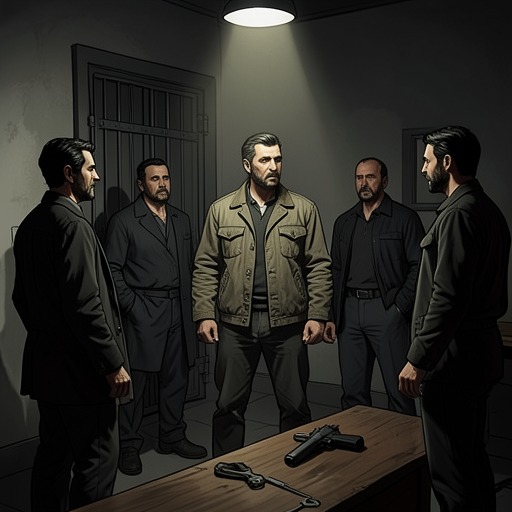
The danger begins when three men enter the building where Isaac and Poe have settled. The largest claims that they are occupying the group’s spot. Isaac stands, but Poe stays where he is and disputes the claim. After a disturbance inside, Isaac initially prepares an escape route across the field and waits for Poe to emerge. When Poe does not come, and the noise stops, Isaac recognizes that something may be wrong and decides to go back.
Before re-entering, Isaac hides his backpack and the money he has been carrying. He picks up the ball bearing, judging that the iron pipe would be taken from him, and slips in through a back door. Inside, [Murray Clark](entity:character-recall-character-murray-clark-e2a8f4138f15) is on the ground and Poe is being physically threatened and held against his will. Isaac remains in darkness while the men face away from him. [Jesús](entity:character-recall-character-jes-s-9bbfb9e16962) calls for [Otto](entity:character-recall-character-otto-b03057fe2235), and another voice indicates that Isaac has already left. Otto then returns to the firelit area, apparently expecting to find Poe there alone.
Isaac throws the bearing as hard as he can. It strikes Otto, who collapses. Poe breaks free and runs out; Isaac stays frozen for a moment, watching Otto and recognizing from the force of the blow that he has killed him. Jesús kneels beside Otto. The action is brief, but its consequence is irreversible: Isaac has stopped the immediate threat to Poe by inflicting a fatal injury.
## Flight, Return, and Encounter with Harris
After the assault, Isaac and Poe make their way away from the building and toward the railway tracks. The scene does not present their departure as a settled escape. When they later approach the machine shop again, the ground has been churned up by vehicles, and tracks lead up a muddy road. [Bud Harris](entity:character-recall-character-bud-harris-4c14453c3d06) is waiting in his black-and-white Ford truck. Isaac and Poe emerge from the brush and see the truck’s lights come on; Poe walks toward Harris, and Isaac follows.
Poe suggests that Harris would not still be there if he had found Poe’s jacket, and treats their presence as something that can be explained away. Isaac is less reassured. As they pass the building, he imagines that investigators and the coroner have already arrived, and his thoughts turn sharply against Poe. He believes Poe will soon remember himself as innocent and forget that a person has died, while Isaac will be left carrying the choice he made. This is Isaac’s fearful, accusatory interpretation of Poe, not an independent confirmation of what Poe will remember or admit.
Harris’s encounter with the young men includes a joke that he will not arrest Billy Poe, followed by his clarification that the remark was a joke. The exchange does not resolve their exposure to the consequences of the killing. Instead, Harris’s presence places the boys’ private effort to manage the aftermath within the orbit of local law enforcement, where the evidence of their return and the death itself can no longer be treated as distant possibilities.
## Responsibility and Narrative Significance
The scene’s central conflict is not only whether Isaac can save Poe, but who will bear the cost of doing so. Isaac’s hesitation outside the building gives way to decisive action when he understands that Poe is in danger. Afterward, however, he does not experience the act as a clean rescue. He sees Otto’s death as something he chose, and resents the possibility that Poe will treat the consequences as Isaac’s alone. The narration follows that division between outward action and inward reckoning: Isaac acts for his friend, then turns the event over repeatedly in his thoughts.
The bearing condenses that reversal. It is an industrial object found among abandoned scrap, heavy enough to change the course of the confrontation in a single throw. Its use links the violence to the material landscape of the closed mills without suggesting that the landscape itself dictates what Isaac does. The larger history of the Valley explains the ruined setting and constricted prospects; the scene nonetheless insists on the particular choice made inside it.
The event therefore binds loyalty to responsibility rather than allowing one to cancel the other. Isaac prevents further harm to Poe, but the rescue does not absolve him of killing Otto. Their flight, their return to the shop’s vicinity, and Harris’s waiting truck extend the consequences beyond the moment of impact. The death becomes the point from which Isaac’s effort to protect Poe and his struggle to face his own part in what happened proceed together.
Event 6
Grace and Virgil’s falling-out
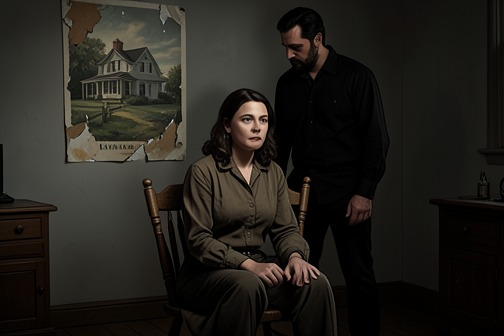
[Grace and Virgil’s falling-out](entity:event-recall-event-grace-virgil-92d4965448c5) is the point at which a long, unstable relationship becomes a deliberate separation. In the family’s cramped trailer, [Grace](entity:character-recall-character-grace-f21f0fdf609d) moves from testing whether [Virgil](entity:character-recall-character-virgil-639f3194e232) will leave to insisting that he do so. The break is not secured by a lawyer or a clean financial settlement; it rests on her recognition that she has been carrying the household and excusing his cruelty, and on her decision to stop treating their history as a reason to continue it.
## A relationship sustained by return
Grace and Virgil have separated and reunited repeatedly. She has dated other men during their breaks, and twice came close to leaving Virgil for [Bud Harris](entity:character-recall-character-bud-harris-4c14453c3d06), but did not imagine a life with Harris and returned to the familiar relationship. Her lingering thoughts about Harris now feel guilty because Virgil is back, yet the history makes clear that dissatisfaction is not new. What changes is not the existence of conflict but Grace’s willingness to interpret it as a reason to act.
The material setting gives that history weight. Grace has lived in the trailer she never wanted, with fake wood paneling and a bed the couple could never afford to replace. When Virgil asserts that it is still his house, she answers that she has made every payment herself since he left and that the few hundred dollars he has contributed do not make a meaningful difference. Their dispute is therefore also about who has borne the costs of keeping a shared home, and who gets to claim it as his own.
## Virgil returns, and the argument changes
Virgil arrives in a state that Grace recognizes as intoxication. The encounter between them briefly resumes the familiarity of their relationship, but it does not resolve what has brought him back. In bed, she asks whether he is leaving. When he says he had not planned to, she tells him that perhaps he should. His insistence that the home is still his makes the division plain: he speaks from past belonging, while Grace points to the present arrangement and her own payments.
She says that she has spoken to a lawyer from the shelter and that the house is legally hers until Virgil pays his share. She has not actually consulted a lawyer. Yet the lie surprises her by how angry it makes her feel; although she knows it is not true, she believes the claim ought to be true. That distinction matters. Grace is not presenting a verified legal outcome, but giving voice to a claim of fairness that she feels has been denied. She tells Virgil to seek advice himself and invokes Bud Harris’s warning that unpaid child support could constitute a felony. Virgil counters that their son is no longer a child, but the exchange does not turn into a negotiation that can restore the relationship.
## Making the separation decisive
Virgil calls Grace a nightmare. She tells him to leave and to take everything he brought the previous night. He dresses and goes, shaking his head as he walks out. The departure is consequential precisely because it follows so many earlier breaks: this time, Grace does not treat his leaving as a temporary pause or wait for his next return to define what happens.
After his truck pulls away, Grace thinks she might cry, then forces herself out of bed because she fears remaining there and sinking into despair. She recognizes a pattern others at work had already noticed: Virgil may have come back because he had run out of money or been left by another girlfriend. The thought does not make her feel triumphant. She begins crying, but not for long, and throws away the whiskey he left because she cannot bear that his mouth has touched it. These small acts turn rejection into a practical refusal to keep his presence in the house.
## Billy and the decision to change
Grace’s judgment of Virgil sharpens into a judgment about what their relationship has meant for Billy. She sees Virgil as cruel and empty beneath the looks that had once helped him get by, and recognizes that Billy’s quick temper comes from his father. She has not been unaware of Virgil’s mean streak, she admits to herself; she had chosen not to acknowledge what she saw. The separation thus includes a painful reassessment of the family past, not simply a quarrel over money or possession of the trailer.
Her worry for Billy is immediate and specific. He has returned with a cut on his neck, and she thinks of him as someone repeatedly drawn into trouble. Earlier, after he came home freezing and distressed, she had warmed him, tried to care for him, and recognized that his losing work had sent him into a tailspin. His refusal to let her remove all his clothes reminds her that care cannot mean overriding his boundaries. By the time she plants, she is thinking that she should have taken him away from this place long ago. The evidence does not make that intention a completed plan, but it shows how the break with Virgil becomes bound up with Grace’s fear for her son’s future.
## After the break
Grace does not end the scene with a legal victory or a new household secured. She turns instead to tasks she can complete: she carries the tomato plants outside, digs into the soil, plants all six tomatoes and the peppers, and sets their trellises. The ordinary work gives her a way to move after Virgil’s departure, while the open view over the rolling hills offers a contrast to the cramped trailer and the life she had not wanted.
She thinks that forty-one is not too old and decides she will call Bud Harris, whom she considers a good man. She has not yet made that call in the scene, and her earlier doubts about a life with him remain part of the history. The ending is therefore not a new romance or a fully settled escape. It is a change in Grace’s willingness to choose: she has made Virgil leave, rejected the excuses that had kept the relationship intact, and begun to turn her attention toward a future shaped by her own decisions.
Event 7
Isaac leaves Buell
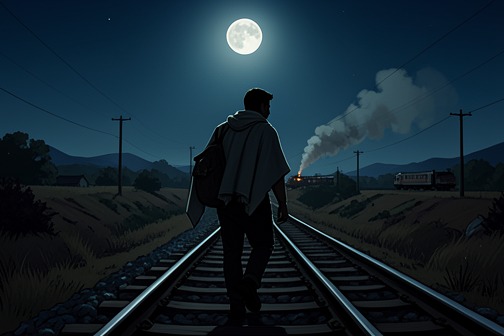
[Isaac English](entity:character-recall-character-isaac-english-4666b5358751)’s departure from [Buell](entity:location-recall-location-buell-dd1b10e7bf85) begins after he realizes that [Lee English](entity:character-recall-character-lee-english-28ee984e607d) and [Billy Poe](entity:character-recall-character-billy-poe-3764007934c2) have rekindled their intimacy. Hurt by the discovery and convinced he has arrived too late to repair what has broken, he leaves home in darkness and follows the old rail line west, turning a family rupture into a solitary journey toward [California](entity:location-recall-location-7255928c66a8).
## The Decision to Leave
Before dawn, Isaac gathers a blanket and extra socks, takes a backpack, and quietly goes downstairs. [Lee](entity:character-recall-character-lee-13e62d55242f) is asleep on the couch; as he prepares to leave, she wakes and asks where he is going. He initially says he is going nowhere, but when she tells him she heard him and Billy Poe, he confronts her with what he overheard: she had told Billy she loved him. Lee insists that the relationship is an old thing and now over. Isaac tells her she is a day too late to make things right, then walks out before she can answer.
His anger carries more than the immediate discovery. He thinks of his mother’s death and connects it to the losses of Lee and Billy Poe, while also recognizing that his bitter judgments of Lee are thoughts he is telling himself. The scene leaves the precise weight of each grievance unresolved, but makes clear that he is departing amid grief, resentment, and a sense that his ties to home have already come undone.
## Across the Mill and Out of Town
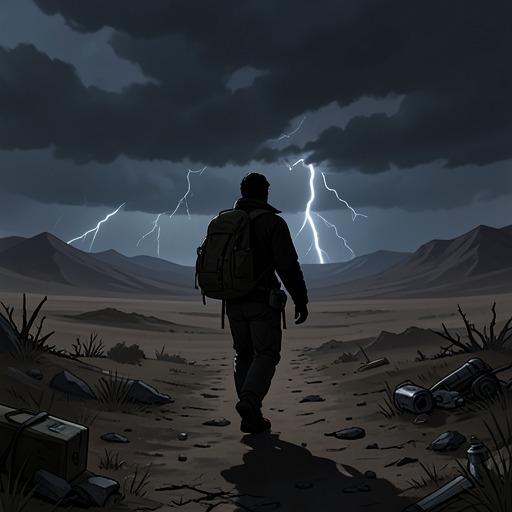
Isaac moves through the ravine and along the creek to the steel mill south of town, then heads north through its dismantling grounds. The abandoned complex still holds four rusted blast furnaces, long empty buildings, slag cars on their tracks, and stacks of structural steel left behind when the dismantling ran out of money. He passes beneath the ore crane and leaves the industrial ruins behind by way of the railway.
The tracks take him past Buell, his old school, and the road to Billy Poe’s home. The railbed narrows and winds along the hillside between dense woods; soon the town and its familiar landmarks disappear from view. The physical route gives the departure its decisive shape: Isaac does not simply leave a house after an argument but crosses the landscape of his former life and continues alone beyond it.
## The Journey Begins
Isaac is bound for California, imagining warmth and a desert of his own. The narration frames this as the beginning of the journey in earnest, while showing how little certainty accompanies it: he watches for fires at hobo camps in the woods and recasts himself as a king of snakes and a duke of hoboes. A satellite crossing the sky links his solitary movement to other wanderers, from traders to astronauts, without making the road feel less lonely.
As night gives way to gray dawn, birds stir in the woods according to their own steady rhythms. Isaac contrasts their unchanging rules with his chosen life outside them, imagining a person who makes his own sun and prefers the night. The passage establishes the departure as both escape and self-invention; it records his intention to reach California, not his eventual arrival.
Event 8
Isaac kills Otto Carson while protecting Billy Poe
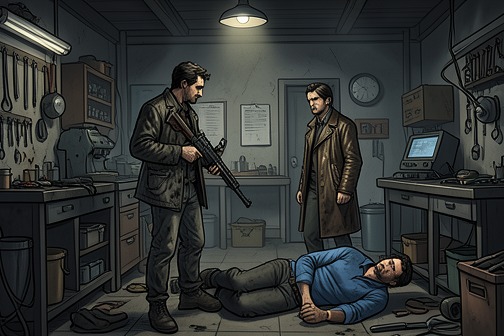
[Otto Carson](entity:character-recall-character-otto-carson-8529b6d48636)’s death turns an act of protection into a crime concealed by two friends, then into the disputed foundation of [Billy Poe](entity:character-recall-character-billy-poe-3764007934c2)’s prosecution. [Isaac English](entity:character-recall-character-isaac-english-4666b5358751) killed Carson during a confrontation in a machine shop, intervening when another man threatened Poe. Their flight left Poe exposed to a witness’s account that assigned the killing to him, while Poe’s own understanding of what had happened remained more complicated than a simple denial or confession.
## Causes and Background
The confrontation took place at a machine shop, but the available accounts do not provide a continuous description of how it began or precisely how Isaac killed Carson. The later evidence instead assembles the event through competing versions, photographs, and the characters’ attempts to name their responsibility. That partial, retrospective presentation matters: Carson’s death is certain, but the account of who did what is contested, and the truth is disclosed in stages rather than settled at the scene.
Harris describes Carson as a man with a history of trouble: he had been imprisoned for various offenses, spent time in mental wards, and had two outstanding assault warrants, one from Baltimore and one from Philadelphia. Harris says that Carson was likely to kill someone sooner or later and may already have done so. This is Harris’s assessment of the dead man, not an independent account of the confrontation. It helps explain why he considers a self-defense plea plausible, but it does not make Carson’s death legally or morally uncomplicated.
The confrontation also unfolds in a region marked by industrial decline. The Valley had once been a major center of steel production, but had lost 150,000 jobs by the period described; many towns could no longer afford basic services, and some had no police. That history does not establish the cause of the killing. It does, however, place the event and its aftermath in a community where strained institutions and limited prospects form part of the characters’ ordinary world.
## The Killing and the Flight
Poe later recognizes that Isaac killed Carson while preventing the other man, [Jesús](entity:character-recall-character-jes-s-9bbfb9e16962), from cutting Poe’s throat. In Poe’s private reckoning, the confrontation had narrowed to a choice between his own survival and Carson’s. He tries to separate himself from the killing by reasoning that he was not the person who struck the fatal blow. He then recognizes that this distinction cannot fully absolve him: Isaac acted because Poe faced an immediate threat, and Poe understands Carson’s death as bound to his own continuation.
The two friends’ decision to run becomes consequential. Harris tells Poe that if he had come forward immediately, the case might have supported an uncomplicated self-defense plea, or might even have gone away. Instead, Poe’s flight leaves room for suspicion and gives the prosecution a version of events in which Poe appears to be the killer. Harris’s point is not that the outcome would certainly have been different, but that the delay has made Poe’s situation far more dangerous.
## Conflicting Accounts and Disclosure
When Harris confronts Poe with photographs, Poe drops the printouts after recognizing the scene. Harris identifies the dead man as Otto Carson and says state police want to confiscate Poe’s sneakers. The photographs and the shoes connect Poe to the aftermath, but the scene does not by itself resolve who killed Carson. Harris also tells Poe that a man who was present has accused him of killing his friend.
Harris later gives Poe the witness’s account in detail: Isaac supposedly saw a fight developing and left; Poe supposedly stayed, started a fight, struck the witness, and then hit Carson harder. In this version, Poe is the assailant and Isaac has disappeared from the immediate events. Poe asks about a third man who held a knife to him, but Harris says the witness has not mentioned a knife and doubts that the third man will be found. The discrepancy exposes how a version that omits Poe’s threatened position can transform a protective intervention into an apparent murder by Poe.
Poe eventually tells [Lee](entity:character-recall-character-lee-13e62d55242f) that Isaac was responsible. His disclosure changes the understanding of the case without ending its uncertainty: it identifies the person who killed Carson, but does not undo Poe’s flight, the witness’s accusation, or the danger of the prosecution. The revelation also places loyalty under pressure. Naming Isaac may correct the account of the killing, while implicating the friend whose intervention saved Poe.
## Responsibility and Aftermath
Poe’s private judgment reaches beyond the distinction between the person who struck Carson and the person charged with the crime. He knows that Isaac’s act prevented Jesús from killing him, and he also knows that invoking this necessity can become a way of talking himself out of responsibility. His eventual conclusion is that Carson’s death is his responsibility too, even though he did not deliver the fatal blow. The novel therefore holds two claims together: Isaac caused Carson’s death, and Poe cannot treat his own survival as morally separate from it.
The event’s consequences arise partly from what follows the killing. Poe and Isaac do not report it; Poe’s account and the witness’s account diverge; and Harris’s assessment that an immediate self-defense claim might have helped cannot reverse the decision to flee. Carson’s prior record complicates the reader’s judgment of him, but does not settle the factual dispute or erase the cost of his death. The delayed disclosures make the killing more than a mystery about the identity of the assailant: it becomes a test of whether loyalty, legal guilt, and moral responsibility can be made to coincide.
Event 9
Isaac English leaves Buell and travels west
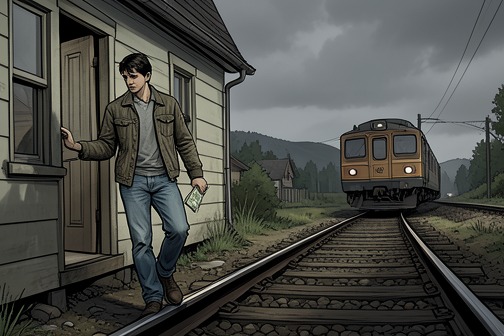
[Isaac English](entity:character-recall-character-isaac-english-4666b5358751) leaves [Buell](entity:location-recall-location-buell-dd1b10e7bf85) by slipping out with stolen money and following the railroad west, trying to make distance from his injured father, his sister [Lee](entity:character-recall-character-lee-13e62d55242f), and a killing that may yet implicate [Billy Poe](entity:character-recall-character-billy-poe-3764007934c2). His departure is both practical escape and uncertain self-reinvention: he has a destination, [California](entity:location-recall-location-7255928c66a8), but no dependable itinerary, and the tracks carry him into a journey whose next steps depend on strangers, freight trains, and what may happen to the people he has left behind.
## Reasons for Leaving
Isaac is twenty, slight enough to be mistaken for a boy, and living alone with [Henry English](entity:character-recall-character-henry-english-5a7ad5f8adc5), his father. Isaac’s mother has been dead for five years, but remains present in his thoughts. He has taken four thousand dollars from Henry’s desk. He corrects himself from the softer idea of taking it to the harder recognition that he has stolen it, and understands that being seen could bring Silas and the dogs after him. The money gives his escape a concrete means, but also marks it as a betrayal within the household he is leaving.
The plan has been forming for a month. Isaac intends to reach [Pittsburgh](entity:location-recall-location-pittsburgh-8a5ce870ed28) by following the railroad along the river, board a coal train, and continue west until he can catch another train to California. He has considered whether Billy Poe will come with him, but doubts it. The question gives the journey a second purpose: Isaac is not simply fleeing alone from Buell; he is measuring the distance between his own departure and the loyalty he feels toward the friend he expects to remain behind.
## Leaving Buell
From an overlook, Isaac sees Buell set among rolling hills, forest, and a muddy, winding river. The town’s steel mill, once like a small city, had closed in [1987](entity:time-recall-time-1987-2a77483a819d) and was partly dismantled ten years later. Vines and trees cover its remaining structures, while deer and coyote tracks cross the grounds; people appear there only occasionally as squatters. Buell’s decline is not a distant backdrop to Isaac’s departure. The abandoned industrial landscape is part of the place he is trying to leave, and the rail line that once served its industry becomes his route out.
The town still bears traces of prosperity: rows of white houses, church steeples, an Orthodox cathedral, and historic stone buildings downtown. But many storefronts and blocks have been boarded up or abandoned. Isaac walks the tracks to avoid being seen, although few people are out. He remembers the shift change at the billet mill, when men coated in steel dust emerged into the light and his tall father reached down to lift him. That memory belongs to a time before the accident changed Henry into the diminished figure Isaac now calls the old man. The route away from town thus passes through a landscape of industrial loss and through Isaac’s own altered memory of home.
At night he moves through the grounds of the closed mill, past its long empty buildings, rusted blast furnaces, powerhouses, slag cars, and stacks of structural steel left behind when dismantling funds ran out. He then follows the tracks past his old school and the road to Billy Poe’s home. Buell falls out of sight behind him. The departure acquires its force through these familiar landmarks: Isaac does not leave by an abstract road west, but by passing the places that have defined his life and the friend he has not persuaded to join him.
## A Journey Without a Fixed Route
Isaac’s intention to reach California is firmer than his knowledge of how to get there. Later, when asked for his destination, he answers California, but admits he has no idea how he will reach it. The answer reveals his vulnerability to the man asking: Isaac realizes too late that the question was meant to discover whether he needs help. He has the destination; the practical route remains open to whoever can provide passage.
That dependence leads him to the Baron. [The Baron](entity:character-recall-character-the-baron-9f443c8f42bf) directs him toward a large freight train with four units, bound for a place near [Detroit](entity:location-recall-location-67107b1c9592), where Isaac expects he will be able to find another way onward. When the train starts, its headlights sweep across the men. They run beside it over loose gravel; the Baron throws his backpack onto a platform and climbs aboard between cars, while Isaac tosses his own pack onto the rear platform of a different hopper and pulls himself up its ladder. The immediate achievement is modest but decisive: after so much walking, Isaac is moving without having to lift a foot. The train carries him away from Buell, but not yet to his announced destination.
The journey also changes in Isaac’s thoughts. At a secluded spot on a sunny riverbank, he tells himself to appreciate the day rather than keep moving; he imagines reaching [Berkeley](entity:location-recall-location-bfa6c84ffbc2) and postponing thoughts about what may happen with [Otto the Swede](entity:character-recall-character-otto-the-swede-9e233681147d). He believes the truth about what he has done will eventually come out and expects Billy Poe to talk, yet still regards Poe as the best of them. His confidence in escape therefore remains entangled with fear of discovery and affection for the person he may have exposed to danger.
## Those Left Behind
Lee becomes certain that Isaac is not coming back when Henry brushes aside the money Isaac took and says that Isaac will return soon enough. She interprets Henry’s calm as evidence of the opposite. When she tells Billy Poe that Isaac left the previous morning, a few hours after Billy had left, and that he had a bag packed, she watches Billy’s expression change from confusion to fear and then become unreadable. The departure is not wholly secret: Lee makes it known to Billy, turning Isaac’s private flight into news that changes what Billy must understand about his friend’s absence.
Isaac’s own thoughts return to Lee. He imagines that if she happened to drive past, he would go with her, and recalls her graduation, when her academic distinction and admission to [Yale](entity:organization-recall-organization-c7e83f9fc73d), Stanford, Cornell, and Duke made his own future seem momentarily visible to him. Their mother’s death and Lee’s departure for a new life broke that imagined parallel. He does not blame her for leaving, but her success sharpens the difference between her departure and his: she had a clear next stage, while he is traveling toward California without knowing how he will get there.
## Significance
The movement west is driven by escape, but the novel presents no clean break between leaving and belonging. Isaac takes money from Henry, passes his old school and Billy Poe’s road, and boards a train whose destination is only a step toward California. His progress is real, yet provisional. The closed mill and the unused remnants of its dismantling mirror the instability of the route: both town and traveler are moving out of an earlier life without a settled account of what comes next.
Isaac also leaves with a moral burden rather than putting it behind him. He anticipates that what he did will be discovered, worries that Billy may speak, and nevertheless holds to his loyalty and admiration for him. The journey’s central tension is therefore not simply between Buell and the West. It is between flight and responsibility: Isaac can put miles between himself and home, but his thoughts continue to circle the people, memories, and possible consequences that make escape incomplete.
Event 10
Drowning death of Isaac and Lee’s mother
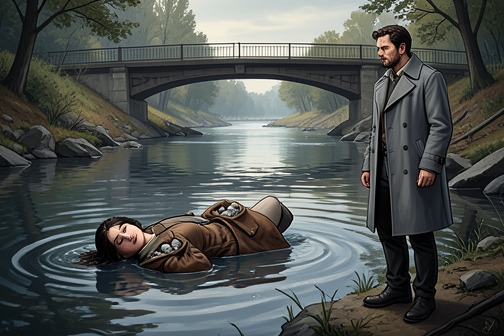
[Mary English](entity:character-recall-character-mary-english-7cbedb900f60)’s drowning is a defining loss for [Isaac English](entity:character-recall-character-isaac-english-4666b5358751) and [Lee English](entity:character-recall-character-lee-english-28ee984e607d), but its circumstances never become fully knowable. Her body was recovered from the [Lock Four](entity:location-recall-location-2c685a5efe73) channel after two weeks missing; the autopsy established drowning, while the stones in her coat pockets and [Henry English](entity:character-recall-character-henry-english-5a7ad5f8adc5)’s suspicion of murder leave the family confronting questions the available evidence does not settle.
## Disappearance and Discovery
Mary English was missing for two weeks before she was found in the actual lock channel at Lock Four. Isaac recalls that the pale cement walls made her body visible against the channel. [Lee](entity:character-recall-character-lee-13e62d55242f) had told him where she was recovered, though no one knew where she had entered the river. The distinction between where [Mary](entity:character-recall-character-mary-ea333e3cde9f) went in and where she came out remains central to the account: the place of recovery is known, but the events leading to it are not.
Henry English was convinced that Mary had been murdered, suspecting skinheads, but the autopsy found water in her lungs and no other wounds. That finding established drowning without explaining how she came to be in the river. The narrative does not resolve the gap between Henry’s suspicion and the medical finding, or establish the precise circumstances of her death.
## The Stones and Isaac’s Memory
The detail that most sharply unsettles Isaac is that eleven pounds of river stones were in Mary’s coat pockets. He had estimated their weight by collecting field stones and checking them on a scale. In the same memory, he recalls that Henry caught him weighing himself. The connection makes the stones more than a forensic detail in Isaac’s mind: they bring his mother’s death into contact with his own past thoughts about the river and the weight needed to sink a person.
Isaac imagines Mary walking along the river, gathering the stones and humming. This is his reconstruction, not a witnessed account of what happened. As he remembers her, he also considers that she had her own pain, a suffering he understands as inward. His response shifts from trying to account for the physical evidence toward acknowledging a distress he cannot fully know or undo.
## The River and Its Industrial Setting
The memory returns to Isaac while he is traveling beside the river at night. Across from [Charleroi](entity:location-recall-location-99f3992842b7), he sees the lights around the cranes at Lock Four and recognizes the site where Mary was found. Barges and towboats move through a river that is also part of the region’s working landscape; elsewhere Isaac observes coal traffic, power plants, and the extensive [Clairton coke works](entity:location-recall-location-0486d209156e). The river’s natural and industrial features coexist, but the evidence does not connect pollution or industrial activity to Mary’s death.
The wider setting is one in which environmental damage and everyday life are closely entangled. Isaac knows that fish from the river carry mercury and PCBs, though people still eat them, and [Buell](entity:location-recall-location-buell-dd1b10e7bf85)’s failing sewer system spills sewage into [the Mon](entity:location-recall-location-4a6bc91fd1c8) during heavy storms. These details establish the compromised condition of the waterway, not a cause of Mary’s drowning. Against this landscape, the lock channel is both a working piece of infrastructure and the place where the family’s unanswered loss becomes concrete.
## Aftermath and Significance
Mary’s death recurs in Isaac’s thoughts as he moves through the same river country. The recovery site gives his memory a fixed location, but not a complete explanation: Lee can tell him where Mary was found, while the point at which she entered the river remains unknown. The stones invite inference, yet neither Isaac’s imagined scene nor Henry’s suspicion closes that uncertainty.
The episode also shapes how Isaac thinks about death and the obligation to the living. At the river, his recollection of Mary’s suffering sits beside his effort to affirm the value of life. Her death is therefore not only a past family tragedy but a continuing pressure on Isaac’s own choices: he confronts the possibility of despair while trying to turn attention back toward living. The account preserves both the weight of what happened and the limits of what the survivors can know.
Event 11
Billy Poe is arrested and jailed for Otto Carson’s death
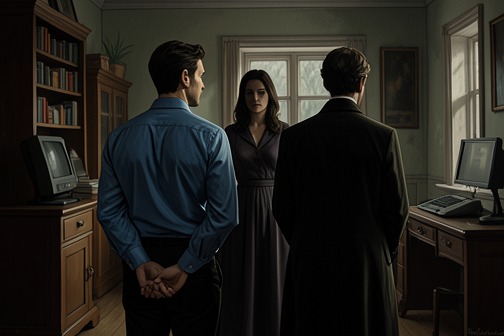
[Billy Poe](entity:character-recall-character-billy-poe-3764007934c2)’s arrest and imprisonment for [Otto Carson](entity:character-recall-character-otto-carson-8529b6d48636)’s death turn a concealed moral crisis into a public and institutional one. Removed from [Grace Poe](entity:character-recall-character-grace-poe-38cb7d239774)’s home, identified during a lineup, and delivered to a prison whose gates close behind him, he loses control over where he can go and whom he must face. The episode’s reach extends beyond the arrest itself: [Grace](entity:character-recall-character-grace-f21f0fdf609d) is left to reckon with the cost of her choices, while Billy’s first encounters with prison reveal a social order that will shape his daily prospects.
## Arrest and Separation
The arrest begins at home, with [Bud Harris](entity:character-recall-character-bud-harris-4c14453c3d06) entering the bedroom where Billy has fallen asleep beside Grace. Harris wakes him and says it is time to go. Billy flinches when Harris touches his shoulder, then stands between Harris and his mother, blocking the view of her. The gestures make the departure intimate as well as procedural: Billy is being taken away, but he is also trying to shield Grace from the sight of what comes next.
On the drive, Harris pulls over before they reach the main road. He explains that Billy will have to ride behind the partition and be handcuffed because state police may be waiting at the station. Billy lets Harris cuff him, and the confinement calms him. The detail marks an early reversal: what might ordinarily signal humiliation or resistance instead offers a temporary limit to the uncertainty of the arrest. Harris is both the officer taking him in and the person trying to prepare him for what awaits.
At the station, Billy is placed in a holding cell and later brought to stand against a wall with five men of roughly his age and height. One of the men is a police officer who had been in the lobby but is now dressed in civilian clothes. They face a mirrored window before Billy is returned to his cell. Harris later tells him that the identification did not take long. The lineup turns suspicion into a consequence Billy can no longer avoid, even though the account does not detail who made the identification or what they saw.
Harris says he is trying to persuade a local public defender to take Billy’s case. Billy thanks him, but the offer cannot change the immediate fact of his detention. He is taken from the station in a caged van, traveling through winding country roads before arriving at a newly built prison on a hill. The compound’s high fences, razor wire, guard towers, patrol vehicle, and dirt yard establish a setting organized around surveillance and containment. At the gate, Billy watches the way back recede as it closes behind him.
## Intake and the First Night
Inside, guards take the large manila envelope containing Billy’s wallet and watch, count his money in front of him, and direct him through a search. The process reduces the possessions he brought from outside to items to be inventoried and checked. Afterward, he asks about dinner and is told that he has missed it. He makes his bed, looks for something to occupy himself, drinks water, and lies down. The first night brings no settled adjustment: his thoughts race, and he feels that he does not belong in a place like this.
That response gives the transfer its emotional weight without making prison seem like a single, completed ordeal. Billy has crossed a threshold, but he has not yet learned how to inhabit the world on the other side. The institution controls his movement and access to ordinary comforts; the uncertainty of his case and the absence of familiar support leave him confronting confinement before he can understand its routines.
## Grace and the Cost of His Absence
When Grace returns from work, the lights in the trailer are off and everything is as she left it, except that Billy is gone. She cannot bring herself to start a fire or get up from her chair. Her earlier hope that nothing would happen to him gives way to the possibility that he may not come home for a long time, perhaps ever. His arrest therefore separates them in more than physical terms: the person she has spent her life caring for is now beyond her reach, and she has to imagine a future defined by his absence.
Grace connects that loss to decisions made over many years. She thinks she stayed with [Virgil](entity:character-recall-character-virgil-639f3194e232) rather than moving away, and that her choice helped leave Billy in the Valley; she also recalls abandoning her college education when Virgil could not manage the bills alone. Her account is not a simple explanation of the arrest, but an anguished effort to trace the circumstances that preceded it. The event makes her question what love and compromise have cost, while showing how Billy’s imprisonment reverberates through the life of the person left at home.
## Prison’s Informal Order
Billy’s first trip to the cafeteria shows that confinement has a social structure beyond its formal rules. In the crowded corridor, prisoners move through a bottleneck beneath fluorescent lights. The cafeteria is loud and divided into racial sections; white prisoners form a smaller, quieter group. At one end of their area sit three large, tattooed men who appear to command authority. Billy studies the room and his own football tattoos, aware that he has entered a community where status and affiliations may be read from appearance, even though he did not choose his tattoos with prison in mind.
That order soon presses on him through [Dwayne](entity:character-recall-character-dwayne-c0b4ffb07a6c) and [Black Larry](entity:character-recall-character-black-larry-d00928b0b31a). Black Larry says Billy should keep his head down until an issue with the DCs is settled, and Dwayne offers to provide something from his cell. Billy refuses to follow Dwayne back, unwilling to enter a private space with a man he barely knows. The others laugh, and Dwayne reassures him. The exchange exposes the uncertain terms of assistance: protection and material help may be available, but accepting them can mean entering relationships Billy does not understand.
Later, Billy is told that Fisher’s name will be on a shirt and that no one else will be there; he is instructed simply to do what he does. When Billy asks why, [Clovis](entity:character-recall-character-clovis-92ff17cdbc2a) complains about the questions. The episode does not explain the full plan, but it makes clear that Billy is being drawn toward an action whose purpose is withheld from him. Still later, he enters the cafeteria, sees Clovis with younger men and Dwayne, and turns away. He attempts to leave through the route toward the recreation yard, but the doors are locked; Clovis and several of the younger men catch up behind him. The arrest has become an ongoing condition of exposure to prison authority and pressure from other prisoners, with neither formal confinement nor informal alliances offering him an uncomplicated path to safety.
Event 12
Killing at the machine shop
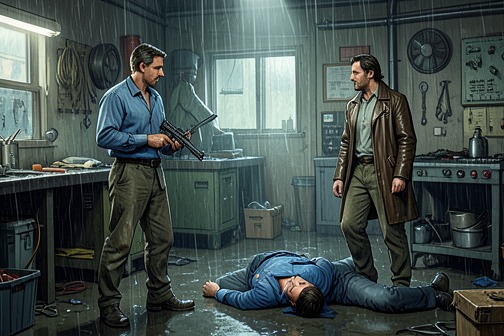
The killing at the machine shop is the decisive rupture in the novel’s account of [Isaac English](entity:character-recall-character-isaac-english-4666b5358751) and [Billy Poe](entity:character-recall-character-billy-poe-3764007934c2): in a moment of danger, Isaac saves his friend by killing [Otto the Swede](entity:character-recall-character-otto-the-swede-9e233681147d), then remains outside the official account of the crime while Billy is charged. The event joins an intimate act of loyalty to a public story that misidentifies who is responsible. Its consequences reach beyond the machine shop, shaping Billy’s imprisonment, [Lee English](entity:character-recall-character-lee-english-28ee984e607d)’s search for Isaac, and Isaac’s later reckoning with the choice that kept them both alive.
## Causes and Setting
The two friends reach the machine shop because Isaac leads them there during a rainstorm. The building is a place where people without shelter gather, and the conditions of their arrival matter: Poe later thinks they should have been back on his porch instead of in a leaking structure with people who insulted him. Isaac, by contrast, is prepared to leave rather than stay in a confrontation. Their different responses—Poe’s insistence on self-respect and Isaac’s willingness to withdraw—help explain how a situation Isaac initiated becomes one he cannot simply walk away from.
The episode takes place against the economic decline of [the Mon](entity:location-recall-location-4a6bc91fd1c8) Valley, a region once central to steel production. Since Isaac and Poe were born, the area has lost 150,000 jobs, and many towns can no longer afford basic services. [Grace Poe](entity:character-recall-character-grace-poe-38cb7d239774)’s memories show how those changes entered domestic life: layoffs ended her education, her family depended on food-bank supplies and poached deer, and a foreclosure moratorium helped them keep their trailer. These circumstances do not cause the killing, but they locate it in a community where industrial collapse has narrowed people’s options and unsettled the institutions around them.
The landscape carries the same history. Nearby towns and workplaces retain the marks of coal and steel production, while local infrastructure continues to deteriorate. [Buell](entity:location-recall-location-buell-dd1b10e7bf85)’s police department faces a historic budget reduction, and the city is under orders to repair a sewer system that sends sewage into the Mon during heavy storms. This is not the explanation for an individual act of violence; it is the strained civic world into which the aftermath falls, with few resources and a shrinking capacity to respond.
## The Fatal Encounter
Poe’s later thoughts make clear that he regards the trip to the machine shop as Isaac’s responsibility: they went because of Isaac, and Poe believes Isaac did not understand the judgment required to avoid trouble. Yet Poe’s own pride keeps him from leaving after the other men insult him. The scene therefore turns on a contrast between the friends rather than on a calculated plan. Isaac can retreat from an insult; Poe feels that retreat would surrender his dignity. Once the confrontation becomes dangerous, however, Isaac returns to protect him.
Isaac’s act is described retrospectively as unpremeditated. He has no knife, gun, or club prepared for the encounter; he uses an object found there. The novel presents the choice as an immediate response to the danger facing his friend, not as an earlier decision to kill Otto the Swede. [Lee](entity:character-recall-character-lee-13e62d55242f) later understands that Isaac went back into the building despite being frightened and despite the risk to himself. For her, the return is the essential fact: he did what he believed he had to do to save Poe.
The event’s value shifts abruptly from ordinary survival to irreversible loss. Isaac’s intervention saves Poe, but Otto the Swede dies, and a friendship expressed through protection becomes entangled with legal responsibility. Isaac’s later reflection recognizes both the instinctive character of the act and its moral weight: he chose his friend over a stranger, and he is the one still alive. The absence of premeditation does not erase that consequence; it makes the killing a sudden, consequential choice rather than a planned course of action.
## Accusation and Recognition
The public account initially points toward Poe. His photograph appears on the front page of the [Valley Independent](entity:organization-recall-organization-valley-independe-6866e17a68cc) beneath a headline identifying him as a football star charged in a killing. Lee hides the newspaper from her father, but the concealment cannot prevent the case from reaching the family. The chief of police comes looking for Isaac and tells Lee’s father that Poe is being charged over the death of the man at the factory; Isaac is considered a likely witness, not a suspect. The gap between what happened and what the authorities can establish becomes part of the event’s aftermath.
Lee does not accept the easiest version of the story. Although she briefly considers whether Poe might have invented his account, she believes him. She is also certain that Isaac killed the man, and she understands that he returned to rescue Poe even though the danger was considerable. Her judgment is not that the death is inconsequential: she sees the intervention as the right thing Isaac could do in that moment. The narrative thus distinguishes legal accusation from knowledge within the family, without making the distinction itself a simple resolution.
## Consequences and Significance
For Poe, the killing becomes the beginning of confinement and the continuing danger of prison life. In his cell he thinks through the chain of events that brought him there: he did not kill [Otto](entity:character-recall-character-otto-b03057fe2235), yet he is the one incarcerated, while Isaac is still free. He also sees that the shop was not an isolated misfortune he could dismiss. He believes Isaac’s decision to enter the situation exposed them both, while acknowledging that Poe’s own sense of dignity kept him from leaving when Isaac wanted to go.
Lee’s response turns recognition into action. Once she accepts that Isaac was responsible and that he acted to save Poe, she decides she must find him rather than wait for the case to resolve itself. The killing therefore changes her position from a daughter watching her father’s decline and trying to understand the accusation into someone prepared to search for her brother and take practical steps on his behalf.
The event also establishes the novel’s distinction between legal guilt and moral responsibility. Poe bears the charge, while Isaac carries knowledge of the act; the two friends’ different situations do not make either fact disappear. Isaac’s later thoughts return to the machine shop as a point of no return, but also as evidence of the small choices by which he and Poe survived. The killing is at once a death, an act of protection, and the beginning of consequences that neither friend can control simply by remaining silent.
Event 13
Billy Poe is jailed on a murder charge
[Billy Poe](entity:character-recall-character-billy-poe-3764007934c2)’s imprisonment on a murder charge makes the death at the factory a public crisis, but it does not settle who is responsible. The accusation draws [Isaac English](entity:character-recall-character-isaac-english-4666b5358751) into the case as a possible witness, brings [Bud Harris](entity:character-recall-character-bud-harris-4c14453c3d06)’s relationship with Poe’s mother under scrutiny, and places Poe inside a prison hierarchy where belonging is conditional. The event is therefore both a legal turning point and a test of the loyalties that have shaped life in [Buell](entity:location-recall-location-buell-dd1b10e7bf85).
## The charge becomes public
The news arrives first as an image and a headline. In the morning paper, Billy Poe’s photograph appears beneath a story presenting a football star charged in a killing. Harris expects the story to travel quickly through Buell and perhaps the wider [Mon Valley](entity:location-recall-location-215aee6ad7c9). Poe’s public identity, once associated with football, is abruptly recast through the accusation; the newspaper turns a local death into a story people will recognize and discuss.
[Lee English](entity:character-recall-character-lee-english-28ee984e607d) encounters the news from another angle. She has hidden the paper so that her father, [Henry English](entity:character-recall-character-henry-english-5a7ad5f8adc5), will not see it, but the attempt cannot keep the case from entering the household. The police chief has already visited looking for Isaac. [Lee](entity:character-recall-character-lee-13e62d55242f) understands that Poe is being charged over the death of the man in the factory and that Isaac is probably a witness, though not yet a suspect. The distinction matters: Isaac is implicated in the investigation by his presence, while the public charge falls on Poe.
Henry gives Lee a more troubling account of the ties around the case. He says Poe nearly killed someone the previous year, and that Poe avoided being locked up because Bud Harris, the officer who had visited, was friends with [Grace Poe](entity:character-recall-character-grace-poe-38cb7d239774). Lee recognizes that she had not understood the earlier incident in quite that way. Henry’s account does not prove what happened at the factory, but it changes the meaning of Harris’s involvement: his concern for Poe cannot be separated from his connection to Poe’s mother. Henry also believes Harris thinks Isaac was present and would prefer that Isaac remain uninvolved unless necessary.
## A community under pressure
The charge unfolds in a place already altered by the collapse of its industrial base. For a century the Valley had been a center of steel production, but by the time Poe and Isaac were born, it had lost 150,000 jobs. Towns struggled to pay for basic services, and some could no longer maintain a police force. This history does not explain or excuse the killing; it establishes the precarious civic world in which the investigation and imprisonment take place.
The same decline has narrowed the choices available to families. [Grace](entity:character-recall-character-grace-f21f0fdf609d) had once planned to leave the mill, but her father sent her to work at Penn Steel after high school. She met [Virgil](entity:character-recall-character-virgil-639f3194e232) on the rolling line, became pregnant, and tried to continue her education while raising a child. Layoffs ended that effort. Later, the family faced foreclosure and depended on food-bank supplies and deer meat; a community protest against sheriff’s sales helped produce a moratorium that allowed them to keep their trailer. These details give weight to the precarious ties surrounding Poe: family loyalty and local protection operate in a region where work, housing, and public institutions have all been insecure.
Harris sees the same pressures from inside the shrinking police department. The Valley’s population is growing again even as incomes and municipal budgets fall, infrastructure remains neglected, and young people accept limited prospects. He doubts that aggressive policing can repair a society without stable employment. The case against Poe thus enters a community eager for a legible story but burdened by problems no single arrest can resolve. The accusation names a defendant; it does not account for the conditions around him or settle the truth about Isaac’s role.
## Prison and conditional belonging
By Poe’s third day in prison, the outside world has become difficult for him to interpret. He walks into the yard behind [Dwayne](entity:character-recall-character-dwayne-c0b4ffb07a6c), where prisoners move in groups and the guards watch from towers. Poe remains with the DC Blacks and is relieved to stay within that group. At the weight pile, [Black Larry](entity:character-recall-character-black-larry-d00928b0b31a) and other shotcallers occupy the center, while other prisoners maintain the surrounding space and sometimes shield activity from the guards’ view. Poe is admitted to the inner circle, but he knows his place is provisional: he is being tested, and he watches the others for cues about when to laugh or become angry.
That precarious position continues when [Clovis](entity:character-recall-character-clovis-92ff17cdbc2a) takes Poe to the yard the next morning. Poe has waited in his cell for an escort and has been told that his lawyer will visit the following day, but he does not want to think about the lawyer. Clovis says nothing as he leads him through the cellblock and out to the yard. At the weight pile, other prisoners either smile in a way Poe distrusts or turn away. He finds a place by the fence and tries not to show that he is nervous; Black Larry approaches him. The sequence makes prison protection tangible without presenting it as security freely given. Poe has a place among the group, but his standing depends on other men’s judgments and can change.
## Significance of the imprisonment
The case links two forms of uncertainty. In Buell, the public must make sense of a killing through a newspaper account, family disclosures, and a police investigation whose witness is not yet a suspect. Inside prison, Poe must read a different system of signals to understand whether he belongs. Neither setting offers a simple resolution: the charge is not a verdict, and inclusion in a prison group is not dependable safety.
The novel also places the legal conflict beside the Valley’s loss of work and public capacity without reducing the crime to economic hardship. The community’s decline shapes the stakes of the investigation and the limited futures available to its people, while the relationships among Poe, Grace, Harris, Isaac, and Lee complicate any clean division between private loyalty and public duty. Poe’s imprisonment makes those tensions visible: the accusation becomes official and widely known, but what happened at the factory, and what others will do with what they know, remain unsettled.
Event 14
Billy Poe’s prison fight with Shorty
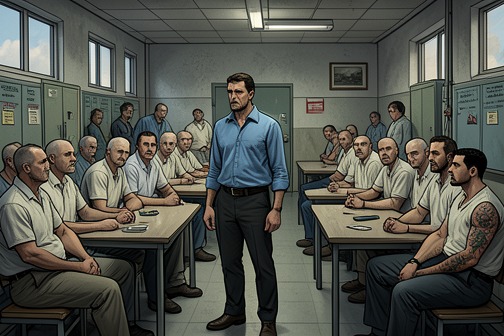
[Billy Poe’s prison fight with Shorty](entity:event-recall-event-7cbe3cc9756e), whom the narrative calls Little Man, shifts Poe from trying to stay unnoticed to becoming a contested figure in the prison’s informal order. He manages to bring down a senior inmate, but the success does not make him safe: it creates obligations and risks that follow him beyond the fight itself.
## Setting and Stakes
Poe encounters the prison’s social order first in the crowded route to breakfast. In the cafeteria, noise and congestion conceal a rigid division: Black, Hispanic, and white inmates occupy separate areas, and white inmates are visibly a minority. Poe notices three large, tattooed men seated together at the end of a table in the white section, a sign that influence there is exercised by inmates as well as by official rules.
The arrangement leaves Poe with little room to move independently. He has arrived with football tattoos rather than markings that would signal an established place among the prison factions. In a setting where reputation and alliances matter, his choice to confront another inmate will affect not only his immediate safety but also the standing of people who expect him to act on their behalf.
## The Fight and Its Immediate Result
Poe’s confrontation with Little Man ends with Poe choking him out. Poe later recognizes that his opponent is a captain, a senior figure whose defeat has embarrassed his associates in front of the wider prison population. His hands are sore afterward, and he knows his blood has mixed with Little Man’s. The narrative records the physical aftermath without making the apparent victory uncomplicated.
For a time, Poe is alone in his cell with food supplied by others. He eats the salmon and crackers, glad to have a meal, and the cell feels safer than the larger prison. But the security is temporary. Poe understands that the person he defeated held influence, and that retaliation will not necessarily take the form of a comparable fight. In the prison’s logic, a response is expected to exceed the original insult.
## Retaliation and Factional Pressure
[Dwayne](entity:character-recall-character-dwayne-c0b4ffb07a6c) explains that Poe’s victory has caused trouble beyond the immediate dispute. Poe has humiliated one of the upper-ranking inmates, giving others a reason to attack him in hopes of gaining favor. The fight has also reopened tensions between the group Dwayne calls the DC Blacks and Poe’s side, complicating matters that had been settled only with effort.
[Black Larry](entity:character-recall-character-black-larry-d00928b0b31a) tells Dwayne that Poe will need to keep his head down while they work things out with the DCs. The protection on offer is therefore conditional and collective: Poe is not simply being shielded from a personal enemy but is being drawn into a negotiation among groups. The danger is sharpened when Dwayne tells him that a guard is to be assaulted as part of the response. Poe asks whether that means he must hit the guard; Black Larry specifies that the guard should remain alive. Their plan makes clear that the prison fight has become a source of leverage, with Poe expected to participate in consequences he did not control.
## Aftermath and Significance
Poe tries to interpret his temporary safety as a reprieve, eating another packet of salmon and telling himself that he can take events day by day. Yet he remains alert to the prospect of a knife attack and doubts that defeating one opponent can reverse the direction of his life. In his private reckoning, he also resents Isaac for bringing him to the machine shop where events began, contrasting Isaac’s willingness to walk away from an insult with his own insistence on self-respect. That distinction helps explain why Poe entered a dangerous confrontation, even as it does not protect him from what follows.
The pressure eventually becomes visible in another cafeteria encounter. When Poe enters and sees [Clovis](entity:character-recall-character-clovis-92ff17cdbc2a) with Dwayne and the younger lieutenants, Clovis rises with an expectant grin. Poe hesitates, then leaves the cafeteria and moves toward the locked doors near the recreation yard. His retreat does not resolve the factional threat; it shows how little freedom the earlier victory has secured. The fight has made Poe harder to dismiss, but also more vulnerable to a prison order in which protection, reputation, and retaliation are bound together.
Event 15
Billy Poe assaults Tucker and is placed in solitary
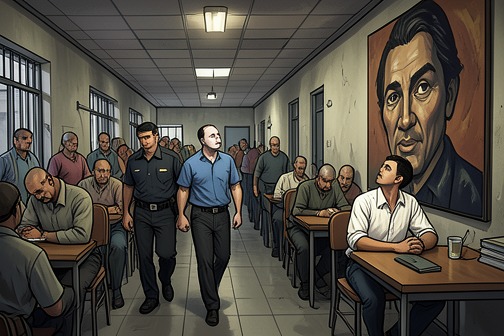
[Billy Poe](entity:character-recall-character-billy-poe-3764007934c2)’s assault on [Tucker](entity:character-recall-character-tucker-a14ba8644b14) ends with Poe removed from the general population and confined alone, but isolation does not settle the danger created by the fight. The episode turns a prison confrontation into a wider crisis: Poe has crossed lines of loyalty, fears retaliation, and learns that Tucker has been taken to a hospital in [Pittsburgh](entity:location-recall-location-pittsburgh-8a5ce870ed28).
## Prison Setting and Rising Tension
Before the fight, Poe encounters a prison organized by crowded movement and informal boundaries. In the cafeteria, inmates stream through congested corridors beneath fluorescent lights, while the dining room is divided by race. Black and Hispanic prisoners occupy separate areas; white prisoners are a smaller, quieter group, with several large, tattooed men appearing to exercise authority among them. The routine is loud and tightly ordered at once: benches are fixed to institutional tables, and the separation of groups shapes where Poe can sit and whom he must navigate.
Poe’s position in this system is uncertain. He has no prison-specific markings beyond football tattoos, and he is conscious of how he may be read by the white prisoners who hold influence. At one point, [Black Larry](entity:character-recall-character-black-larry-d00928b0b31a) tells [Dwayne](entity:character-recall-character-dwayne-c0b4ffb07a6c) that Poe should keep his head down until matters with the DCs are settled. The warning makes clear that protection and safety depend on negotiations beyond formal rules. Poe’s later decision to fight Tucker therefore takes place in a setting where one personal confrontation can affect his standing with more than one group.
## The Fight and Removal
The immediate exchange is brief. Tucker warns Poe, and Poe responds that Tucker can say what he likes. As Poe is about to return to his bunk, he hears Tucker move and strikes him. They struggle in the narrow space between the wall and the bunks, each trying to gain leverage. Poe is stronger; he lands blows and holds Tucker’s head against the floor. The fight stops when Poe realizes Tucker has ceased fighting back and the lights have come on.
Guards are already outside the cell. They use pepper spray and batons, then handcuff Poe and take him from the tier. Disoriented and unable to see clearly, he is led down the stairs; guards wash his face and bring him to the basement. The force used to stop him gives way to a controlled transfer, but Poe experiences the move as another moment of vulnerability. He is taken to a cell like his previous one, except that it has only a single bunk.
## Solitary Confinement and Its Costs
The new cell has no window, and its lights are never switched off. Poe is alone, but solitude offers little reassurance. He believes prisoners from both Black and white groups may now target him: he has broken his word and fought a man connected to each side. He wonders whether Tucker is dead, while recognizing that the possibility of his own death seems more immediate. The fight has changed his position from someone trying to find a place in the prison to someone who believes he has made enemies across its divisions.
In the cell, fear arrives physically and in waves. Poe paces and tests the walls and bars, then forces himself to lie down and calm his mind; after a few minutes, the intensity passes, leaving him weak. He also sees a possible way out of the predicament: telling the truth could change what happens and help preserve his life. That possibility does not erase the danger or establish that he acts on it here. Instead, it shows how solitary confinement turns the question of survival into a choice about whether to disclose what he knows.
## Aftermath and Continuing Danger
A guard later tells Poe that Tucker has been taken to the hospital in Pittsburgh. Asked whether Tucker will return, the guard says that, if he does, he is not expected to trouble Poe or anyone else. The answer gives Poe limited information about Tucker’s condition and possible return, but not certainty about either. It also leaves the consequences of the assault unresolved.
The prison’s informal order remains active beyond Poe’s cell. Later, when he goes to the cafeteria, [Clovis](entity:character-recall-character-clovis-92ff17cdbc2a) is there with younger men, and Dwayne is among them. Poe sees Clovis rise, hesitates, and leaves rather than approach the group. He makes for the doors, but they are locked; when he turns back, Clovis and several of the younger men are behind him. The confrontation with Tucker has thus not ended with Poe’s removal from the tier. Solitary confinement is a direct consequence of his attack, while the later encounter shows that the social threat surrounding him persists.
Event 16
Isaac escapes Baron in Ecorse
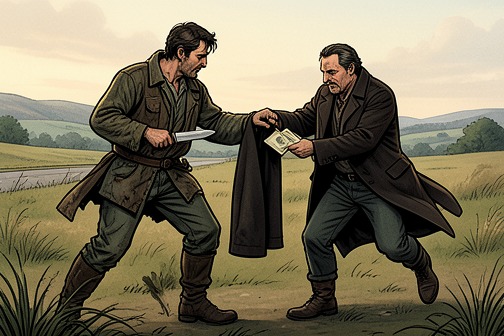
[Isaac escapes Baron in Ecorse](entity:event-recall-event-0858f267c553) is a turning point in [Isaac English](entity:character-recall-character-isaac-english-4666b5358751)’s flight: after [The Baron](entity:character-recall-character-the-baron-9f443c8f42bf) steals the envelope holding his money, Isaac gives chase through an exposed public space, then has to evade the police as well as deal with the loss of his belongings. The episode makes escape a sequence of choices rather than a clean break: Isaac nearly catches The Baron, but will not use his knife, and the police intervention leaves him without his pack and still on the run.
## The theft and the decision to pursue
The episode begins in a clearing in the morning. Isaac wakes to find The Baron beside him, removing a hand from the pocket of Isaac’s cargo pants with the envelope of money. Isaac has slept with his knife in his hand and tenses his grip, preparing to use it. He stops himself, however, and instead grabs The Baron’s coat and tries to wrestle him down. The Baron breaks free and runs, turning the theft into an immediate pursuit.
The stolen envelope is not merely an object to recover: it contains Isaac’s money, and The Baron’s escape threatens the resources on which Isaac depends while traveling. Isaac reacts quickly enough to pursue him, but the knife remains central to the moral and practical limits of his response. As Isaac runs, he considers what catching The Baron would require. The thought of using the knife presents itself as an option; he rejects it, even as he continues after him. The scene therefore puts recovery and self-preservation in tension with the possibility of further violence.
## The chase in public
The pursuit carries the two men out of the woods, past a trailer park and through a parking lot, before they reach a four-lane road with traffic moving in both directions. The Baron runs along the sidewalk past stopped cars and their startled occupants. After a block, Isaac begins to gain on him. The chase is no longer hidden: they pass several dozen cars, and Isaac has the sense that the people around them are watching.
As he closes the distance, Isaac again confronts the prospect of using the knife. He thinks through the risks of tackling The Baron and recognizes that he could injure himself; he nevertheless keeps running, switching the knife from his left hand to his right. This sequence makes the chase a test of restraint as much as speed. Isaac’s aim is still to catch The Baron, but he does not turn that aim into a decision to stab him. The open road, chain-link fence, and traffic constrain their route, while the approaching police car changes the stakes before Isaac can reach the stolen envelope.
## Police intervention and escape
A white car passes in the opposite direction, and Isaac notices blue lights as it makes a U-turn. He is almost close enough to touch The Baron when the siren sounds. The police car cuts across three lanes of traffic and stops on the curb ahead of them. The officer gets out and positions himself behind the car door; Isaac understands that he is drawing his gun. The account does not describe Isaac being arrested or The Baron’s capture in this moment. Instead, the police presence interrupts the chase at its closest point, turning Isaac’s pursuit into a new danger.
In the following section, Isaac hears sirens from a second and then a third car. He guesses that the officers have caught The Baron and heads back toward the canal for his pack. His belief about The Baron’s capture remains an inference, not a confirmed outcome. Isaac expects to have only a minute or two before The Baron might explain the cash, and he recognizes that the police could connect him to the situation. The effort to regain his belongings therefore gives way to a more urgent calculation: avoiding arrest.
## Loss, disguise, and the unresolved outcome
Isaac finds that the pack is gone, and despair gives way to an improvised plan. He decides to alter the appearance the police may have seen: a coat and a black watch cap. He removes both and throws them into the canal, along with the sheath for his knife. Underneath, he has a brown sweater and a blue flannel shirt; he tucks in the shirt and raises its collar above the sweater, aiming for the appearance of a schoolchild. The cold—about twenty-five degrees, by Isaac’s estimate—does not change his decision that avoiding arrest matters more than keeping the coat and hat.
The episode ends with Isaac’s immediate escape strategy, not with a settled resolution. He has lost the money to The Baron and cannot recover his pack, while the police have entered the scene and may be searching nearby. He changes what can be changed quickly: his visible clothing and the route by which he might be recognized. The abandoned sheath also marks a distinction between what he discards to evade notice and the knife he has carried through the pursuit; the evidence does not establish what he does with the knife afterward. By ending on concealment rather than safety, the episode keeps Isaac’s flight precarious and shows how each attempted recovery can deepen his exposure.
Event 17
Isaac escapes from Walmart after taking supplies
[Isaac English](entity:character-recall-character-isaac-english-4666b5358751)’s escape from Walmart turns a desperate attempt to meet immediate needs into a public pursuit. He enters the store exhausted, eats, and briefly falls asleep; then, lacking a coat and uncertain where he is, he decides to take what he needs rather than face another night exposed. The theft is improvised and deliberate, but the escape depends on a sudden opening: when the greeter steps aside, Isaac makes it through the doors and runs into the woods.
## Need, Hunger, and Disorientation
The scene begins with Isaac moving slowly across the parking lot toward the lights and signs of a Walmart. Once inside, he pauses in the blast of warm air, then notices the greeter watching him. His first calculation is not how to get away but how to recover enough strength to continue. He wants a quiet place to sleep, but decides that he must eat first and chooses a cheap meal from Taco Bell: two bean burritos and a taco, selected for their calories. Even this small decision is presented as practical planning. He sits with a glass of water and eats slowly, nearly too tired to manage the food.
An old woman at the next table wakes him by telling him that he has fallen asleep. Her intervention forces him to reckon with what comes next. A shelter occurs to him, but he believes it is the first place people will search for him. He thinks of himself as a vagrant felon and recognizes that he lacks both a coat and a clear sense of where he is. The store cannot offer lasting refuge either; it will eventually close, leaving him where he began. His decision to act follows from this narrowing set of choices: he will take supplies from the store.
## Gathering Supplies
Isaac pushes a cart through the aisles while easy-listening music plays. Other customers focus on their merchandise as he passes, a response he reads as embarrassment at looking directly at him. He recasts the theft as resource gathering and self-improvement, imagining a new beginning built from what he can carry. The contrast between the store’s abundance and his immediate deprivation gives the scene its pressure: coats, soap, food, and clean clothes are ordinary merchandise to shoppers, but potential shelter and preparation to Isaac.
He first collects a razor, travel-sized soap, shaving cream, and deodorant from the pharmacy aisles. He adds energy bars, recognizing them as the same kind [Lee English](entity:character-recall-character-lee-english-28ee984e607d) eats, then takes a four-inch hunting knife from a wall of blades in the sporting-goods section. In clothing, he chooses clean pants, a button-down shirt, socks, underwear, and a pack of T-shirts. He also takes the thickest coat available, a heavy, blanket-lined canvas garment, and a fleece, as well as hats. His selection is both immediate and forward-looking: food and warm layers address the present, while grooming supplies, spare clothes, and a knife serve an imagined future in which he can prepare for himself.
At the checkout, Isaac waits behind a man talking on a cellphone. He judges himself small and unthreatening and hopes that the people around him have plenty else to notice. The employee who has been watching him eventually goes to do something else. Isaac then abandons the queue and pushes the cart toward the dressing rooms, shifting from waiting to action as the chance to pass unnoticed opens.
## Exposure and the Run
In a locked dressing room, Isaac piles the loose goods onto the coat and strips completely. Facing the mirror, he sees a sickly, filthy-haired, unshaven young man, his appearance underscoring how far the imagined self-sufficient figure is from the body that needs help. He puts on the new clothes and then layers his old clothes over them, concealing the change as best he can. He puts the knife at his belt, the soap and razor in a pocket, and energy bars in his jacket. Carrying the coat on his shoulder, he leaves the room and walks toward the exit, already sweating under the extra clothing.
The attempted exit is interrupted when a woman calls after him and tells him to pay for the coat. Isaac does not turn around. He keeps moving toward the doors, hears the request repeated, and then hears people yelling as an announcement calls employees to a code seventy-six. The scene’s movement changes abruptly: the quiet, calculated work of assembling supplies gives way to a chase. Someone runs in the corner of Isaac’s vision, and he runs too.
The store greeter, an old man in a blue vest, is the last person between Isaac and the door. They look at one another as Isaac charges toward him at full speed. The greeter steps aside. Isaac stumbles against the doors and loses ground, but gets out into the parking lot. He runs past idling cars and other shoppers, hears footsteps close behind, and aims for the wooded area at the lot’s edge. A hand brushes his coat; someone falls behind him, but he hears another pursuer. He considers pulling the cart to slow them, then rejects the idea and continues without it.
## Escape and Significance
At the curb, the footsteps slow and stop. Isaac jumps over the high curb, plunges into the grass, and runs downhill, keeping his footing despite the risk of falling. He reaches the woods and continues into the darkness. The escape is physical and immediate, not a resolution of the insecurity that brought him into the store: the clothing and supplies are with him, but he remains a fugitive moving without a known destination.
The episode turns the familiar retail sequence of browsing, selecting, and paying into an improvised survival exercise. Isaac’s internal language gives his actions a mock-heroic scale, casting a hungry, visibly depleted young man as a maker of preparations and a figure on a mission. That self-mythologizing does not erase the material facts. He needs food, warmth, clean clothes, and sleep; he takes those necessities under observation and flees when challenged. His success hinges not on mastery of the store but on a brief human gesture at its threshold, when the greeter moves aside and the woods become an available route out.
Event 18
Harris promises to protect Billy Poe
[Grace Poe](entity:character-recall-character-grace-poe-38cb7d239774)'s appeal to [Bud Harris](entity:character-recall-character-bud-harris-4c14453c3d06) makes [Billy Poe](entity:character-recall-character-billy-poe-3764007934c2)'s protection a private obligation shared between a mother and a police officer. Convinced that Billy acted in self-defense, [Grace](entity:character-recall-character-grace-f21f0fdf609d) sets aside the standards by which she has understood herself as a good person and asks Harris to intervene. She gives him two guns, and he promises to look after her son. His assurance is paired with a warning to keep silent: care becomes an agreement whose secrecy places both of them outside ordinary accountability.
## Causes and Background
The promise follows Billy's involvement in a fatal encounter at the plant and the prospect that he may be imprisoned. Grace believes the death resulted from self-defense. She has seen signs that Billy was threatened and cannot accept the possibility that he will lose his life in prison for defending himself. Her conviction does not make the situation legally simple: Billy has been arrested, and what happened at the plant must be explained in a process where the presence and testimony of other people matter.
The emergency response to the injured man had initially been framed in public, procedural terms. Someone urged that they reach a phone at the Sheetz station to call 911, and another warned that calling an ambulance would bring the police close behind. Later, Harris told Billy that he had done the right thing but urged him to explain what happened and identify who else had been in the plant, so the case could be presented as self-defense at trial. That advice treats truthful disclosure as a possible route to protection. Grace's later approach to Harris takes a different direction: rather than concentrate on what Billy should tell investigators, she turns to the officer she trusts to help secure his safety.
## Grace's Decision
Alone with her thoughts, Grace insists to herself that she is a good person who has always done what was right. She has gone out of her way to help others, but her son's danger forces a distinction between general goodness and maternal loyalty. She recognizes that her judgment is becoming partial: she is prepared to favor Billy over the dead man, whom she understands as a homeless stranger and whom Harris has described as a nobody. The thought troubles the moral identity she has relied on, but does not change her conclusion. In this crisis, protecting her son takes precedence over impartiality.
Grace's deliberation is accompanied by ordinary, private gestures rather than a public declaration. She goes into the bathroom, looks at herself in the mirror, and washes her hands and face. Later she takes a long bath with sandalwood bubble soap that she had saved for a year; it had been a present from women at the shelter. She wonders what those women would think, then decides that any mother would act as she does. The self-questioning does not resolve the conflict so much as expose its cost: she understands that her decision is not the same as the right she would claim in other circumstances, yet feels there is no meaningful alternative for a mother.
## The Exchange with Harris
After the bath, Grace calls Harris, who promises to come over. When he arrives, she says she has things to give him before she forgets. She returns with Billy's lever-action rifle, an old .30-30 that Harris recognizes, and an old single-barrel shotgun. The transfer makes her appeal concrete: she places weapons in the hands of the person she expects to protect her son. The evidence establishes that she gives them to Harris, but does not specify how he intends to use either gun.
Harris answers with a promise to take care of Billy and make sure nothing happens to him. He immediately adds that, just in case, Grace should not tell anyone about this. His assurance offers the emotional certainty she has sought, while the secrecy instruction marks the arrangement as something that cannot be openly defended. He strokes the hair from her face and invokes her role as Billy's mother. The gesture and appeal affirm their closeness, but also frame the decision as a maternal exception to ordinary rules.
## Consequences and Significance
The scene gathers earlier compromises around Billy into a personal pact. Harris has already hidden the jacket connected to Billy, and his thoughts reveal a local ethic of discretion: people are not prosecuted for every wrongdoing, and community members are expected to do right, sometimes through restraint as well as enforcement. His effort to guide Billy toward a self-defense account shows that he sees a lawful defense as possible; his promise to Grace and demand for silence extend his protection into less transparent territory. The scene does not establish what becomes of the guns or whether this promise secures Billy's eventual outcome.
Grace's choice also sharpens the conflict between legal process and loyalty. [Lee](entity:character-recall-character-lee-13e62d55242f), listening to Billy recount what happened, realizes that lawyers and opposing sides may divide the family: the case can set Billy against [Isaac English](entity:character-recall-character-isaac-english-4666b5358751) and Lee's father. Grace's appeal to Harris does not settle that division. It gives her a person to rely on while narrowing the circle of people who may know what she has done. The decisive change is moral and relational: the mother who understands herself through helping people accepts that, for Billy, she will choose sides, and Harris makes that choice a shared secret.
Event 19
Death of Otto (the Swede)
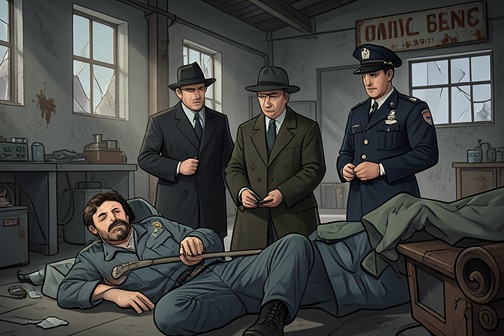
The death of [Otto the Swede](entity:character-recall-character-otto-the-swede-9e233681147d) is the concealed crime around which loyalty, guilt, and the possibility of legal truth converge. The novel does not present the killing as a fully witnessed scene in the supplied passages. Instead, it makes the death legible through its aftermath: [Billy Poe](entity:character-recall-character-billy-poe-3764007934c2)’s imprisonment and private reckoning, [Isaac English](entity:character-recall-character-isaac-english-4666b5358751)’s attempt to take responsibility, and [Bud Harris](entity:character-recall-character-bud-harris-4c14453c3d06)’s effort to stop him from saying more. That indirect presentation leaves the event’s precise circumstances unstated while making its consequences unavoidable.
## Background and Stakes
The factory death occurs against the wider decline of the Valley’s steel economy, though the evidence does not establish that economic hardship caused the killing. The region had once been a center of steel production, supported by smaller industries linked to the mills. By the time of the novel’s present, the Valley had lost 150,000 jobs since Isaac English and Billy Poe were born. Many towns could no longer afford basic services, and some had lost their police forces. This is the social landscape in which a crime can become entangled with a weakened local order, but it does not explain away the choices made by the people involved.
The decline is also visible in the histories of working families. [Grace Poe](entity:character-recall-character-grace-poe-38cb7d239774) had been directed into mill work after high school, later studying while raising a child, but layoffs ended her schooling and left her family without reliable employment. The Poe family’s trailer went into foreclosure; residents’ armed protests against sheriff’s sales helped bring a moratorium that eventually became law. These details establish a community facing material pressure and collective instability, rather than a secure setting in which the law can be assumed to resolve every dispute cleanly.
Bud Harris sees the same fragility from within the [Buell](entity:location-recall-location-buell-dd1b10e7bf85) police department. Its budget is expected to shrink further, with the department potentially merging into a regional force. The Valley’s population is growing even as incomes fall, infrastructure goes unfunded, and public budgets contract. Harris argues that policing cannot repair the absence of stable work or the social damage accompanying it. This context shapes the limits and pressures around the factory case; it is not presented as an excuse for withholding the truth about [Otto](entity:character-recall-character-otto-b03057fe2235)’s death.
## What the Death Establishes
The novel identifies Otto the Swede as the dead man at the center of the factory incident, but the supplied passages do not reconstruct how he was killed. The story instead establishes the crucial distinction between the person blamed and the person who actually killed him. While confined in isolation, Billy Poe considers the choice awaiting him: when he is returned to the prison population, [Clovis](entity:character-recall-character-clovis-92ff17cdbc2a) and others may be waiting, and he believes that sooner or later he will have to reveal what he knows, either to a weapon or to a lawyer. If a lawyer learns who really killed Otto, Billy understands, the information could reach the district attorney and put Isaac in Billy’s place.
Billy’s reasoning makes the death more than a past act with a settled culprit. It has become a present decision about whether to preserve a friend’s freedom or disclose the truth and expose him to prosecution. Billy imagines Isaac as possibly better able to withstand prison, but he recognizes that this possibility does not make the choice easy. His refusal to identify Isaac is a deliberate act of loyalty, made under pressure and with a clear awareness that silence may carry serious personal consequences.
## Confession and Concealment
The death’s secret resurfaces when Isaac returns to Bud Harris and announces that he is turning himself in. He begins by insisting that Billy Poe did not kill the homeless man, then tries to continue with an account of what he and Billy did. Harris stops him before he can finish. The interruption makes the difference between what Isaac is prepared to confess and what Harris is prepared to hear dramatically visible: the conversation cannot proceed as an ordinary report to the police, because the revelation would implicate the people still living with the consequences of that night.
Harris tells Isaac that the district attorney has called to say the two men Isaac was with in the factory have been found dead. He stresses that the only people from that night who remain are Isaac and Billy. Isaac asks what happened to the men, and Harris answers that it could have been anything. The exchange confirms the deaths and the narrowing circle of survivors without explaining the other deaths or establishing exactly what Harris knows. His response closes down the possibility of a straightforward account even as Isaac tries to begin one.
## Consequences and Significance
Otto’s death binds together two different forms of responsibility. In prison, Billy knows that keeping quiet may protect Isaac while leaving himself exposed to further danger. Outside it, Isaac chooses to return and attempt a confession, even though his words are immediately checked. The novel thus places loyalty and truth in direct conflict, without treating either as a painless solution: silence sustains a bond but preserves the risk of punishment falling on the wrong person, while confession could shift that risk onto Isaac.
The killing also shapes Billy’s understanding of what his life means. He remembers having saved Isaac when Isaac went onto thin ice on [the Mon](entity:location-recall-location-4a6bc91fd1c8) River, and later having listened to him through the night after Isaac changed his mind about dying. Billy regards those acts as evidence that he has done something worthwhile. He therefore refuses to betray Isaac, seeing the choice as a final chance not to fail the person he once pulled from the water. That conviction gives his silence a personal history, but it does not resolve the moral cost of concealing a killing.
The event’s narrative force comes partly from what remains withheld. The reader encounters its stakes through prison calculations, an interrupted confession, and Harris’s carefully limited account, rather than through a complete depiction of the factory scene. Otto’s death therefore persists as both a fact and an absence: it has reorganized the lives of Isaac, Billy, and Harris, yet the available revelations do not make the whole night transparent. The unresolved gap between what happened, what can be proved, and what the surviving men will say is the crime’s continuing consequence.
Event 20
Mary English's suicide
[Mary English's suicide](entity:event-recall-event-mary-english-s-suicide-aca9aea42e5b) leaves the English family with a loss they recognize but cannot fully explain or openly face. Recalled through [Isaac English](entity:character-recall-character-isaac-english-4666b5358751)'s reflections, the event is marked by a two-week disappearance, a funeral at which [Henry English](entity:character-recall-character-henry-english-5a7ad5f8adc5) insisted she had been murdered, and the absence of a note or certain account of her final thoughts. Its lasting force lies partly in that uncertainty: grief becomes entangled with blame, and Isaac cannot settle on a single explanation for what happened.
## Disappearance and Uncertainty
For two weeks, the family hoped [Mary English](entity:character-recall-character-mary-english-7cbedb900f60) had left and begun another life, although they understood the alternative they were avoiding. Isaac's recollection offers no account of how she died and no note explaining her decision. He considers whether she had concluded that her parental duty was finished after [Lee English](entity:character-recall-character-lee-english-28ee984e607d) entered [Yale](entity:organization-recall-organization-c7e83f9fc73d), as if it were time for her to leave too, but immediately recognizes that he cannot know this. Anything might have happened, and the possibility that her decision came suddenly remains open. The narrative therefore presents a conjecture about [Mary](entity:character-recall-character-mary-ea333e3cde9f)'s motives as Isaac's speculation, not as an established cause.
## The Funeral and Henry's Grief
At the burial, Henry English would not leave the grave. He kept his chair beside the hole, and Isaac and [Lee](entity:character-recall-character-lee-13e62d55242f) had to push him away. At the funeral, Henry told his friends and anyone who would listen that Mary had been murdered. Isaac understands that others knew this was not what had happened, even as the family had earlier avoided naming the truth. Henry's insistence does not resolve the circumstances; it registers the force of his grief and his inability to accept the death as it was.
## Guilt Within the Family
Isaac remembers blaming Henry and not blaming him, while believing that Henry blamed himself. The recollection makes grief less a settled judgment than a burden that passes between family members without producing certainty about responsibility. Isaac also reflects on staying with Henry partly in the hope of winning his father's approval, rather than from charity alone. In that context, Mary's death remains present not only as a past loss but as part of the strained dependence and unspoken hurt within the family.
## Narrative Significance
The account returns to Mary's suicide through Isaac's fragmented self-questioning rather than through a definitive scene of her final moments. Its gaps matter: the family knew what the disappearance meant, yet did not admit it; Henry publicly named a murder that Isaac knew had not occurred; and Isaac can imagine a reason for Mary's decision only to withdraw certainty from that explanation. The event thus shapes the surviving family's memories while preserving the limit of what they can know about Mary.
Event 21
Steelcor furnace accident
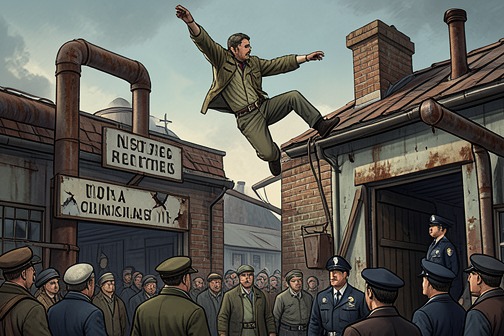
The [Steelcor furnace accident](entity:event-recall-event-steelcor-furnace-accide-a6e5e3d0c1fd) killed Chuck Cunningham and Wayne Davis and left [Henry English](entity:character-recall-character-henry-english-5a7ad5f8adc5) alive after he jumped from the shop during the emergency. Recalled years later amid Henry’s thoughts about his family and his own responsibility, the accident is more than a workplace catastrophe: it links industrial cost-cutting to the sudden loss of workers’ lives, while Henry’s survival becomes entangled with regret over what he believes he failed to provide for those closest to him.
## Background and Industrial Context
Henry had spent three years commuting from Indiana to work at Steelcor, returning home only about once a month. The job paid well, but he remembered it as demanding and unsafe. He had initially accepted the argument that labor costs and unions were to blame for industrial trouble; with hindsight, he came to see that explanation as incomplete. His recollection sets the accident against a larger history of mills allowed to deteriorate while companies pursued production and profit.
Henry’s account also distinguishes that broader history from the specific failure at Steelcor. He recalled Penn Steel and other American mills going years without investment, while German and Japanese producers continued upgrading their plants. Those comparisons shape his retrospective understanding of industrial decline: the loss of steel work was not simply the inevitable consequence of wages or workers’ expectations, but also reflected decisions about whether to maintain and renew industrial infrastructure. The accident gives that structural criticism immediate human stakes, though the text does not establish that Penn Steel’s investment history directly caused the Steelcor failure.
## The Accident
The accident began during a pour. A crane was carrying a ladle containing fifty tons of liquid steel when Henry heard an unfamiliar sound. The crane continued to swing, but the ladle wobbled and fell. Its load spilled across the shop, killing Chuck Cunningham and Wayne Davis, while Henry was close enough to understand that he might not survive.
The failure was not presented as an unforeseeable mischance alone. Henry’s recollection identifies a safety brake on the hoisting drum as necessary equipment and says it was absent because the company had been too cheap to provide it. A gearbox component sheared, allowing the ladle to fall. In the sequence of his memory, the broken mechanism and the missing safeguard make the disaster legible as a preventable industrial failure, even as its suddenness left Henry feeling powerless within it.
As the shop caught fire and further hazards made remaining inside impossible, Henry jumped from three stories. A young Black worker went back through the fire and dragged him out; the rescuer had not been injured. Henry later recalled that the young man said he had seen him jump. The episode therefore turns on a stark reversal: Henry escaped a scene in which two of his coworkers died, but his survival depended on someone else choosing to return for him.
## Deaths, Survival, and Aftermath
The company’s regulatory penalty sharpened Henry’s sense of the imbalance between the loss and its cost to the employer. OSHA fined the company thirty thousand dollars, an amount Henry understood to equal what it made in a single minute. The fine did not restore the two workers’ lives; in his recollection, its scale becomes evidence of how little the formal consequence seemed to match the human cost.
Henry also returned to the accident through a painful calculation about survival. He wondered whether jumping had been a mistake, imagining that if he had remained where he was, his family might have received a pension and compensation from the company. He contrasted his own escape with the deaths of Chuck and Wayne, whom he thought of as having secured their families’ futures. This is Henry’s anguished retrospective judgment, not evidence that either family actually received a particular payment. Its force lies in the way survival fails to feel like uncomplicated good fortune: he measures it against the support he believes he did not leave behind.
## Narrative Function and Significance
The accident returns in a fragmented recollection as Henry drifts from present concerns into memories of the mill. That shift makes the event’s consequences psychological as well as occupational. The failed brake and sheared gearbox recall a concrete workplace disaster; Henry’s later thoughts attach it to his broader sense of failure as a husband and father. His memory does not offer a clean moral accounting. It holds together the company’s responsibility for unsafe equipment, the deaths of two workers, the rescue that saved Henry, and his own troubled belief that surviving may have cost his family something.
The episode also connects an individual catastrophe to the Valley’s shrinking industrial world. Elsewhere, the narrative describes the region’s vast job losses, strained public services, and families left with few local opportunities. Against that background, Steelcor’s accident is not a complete explanation for the Valley’s decline, but a concentrated instance of its human stakes: industrial work could sustain a household and also expose workers to dangers shaped by decisions beyond their control. The memory’s unresolved burden follows Henry into the present, where thoughts of his children and of what he has caused make the accident part of his continuing reckoning rather than a closed chapter.
Event 22
Poe rescues Isaac from the Mon River ice
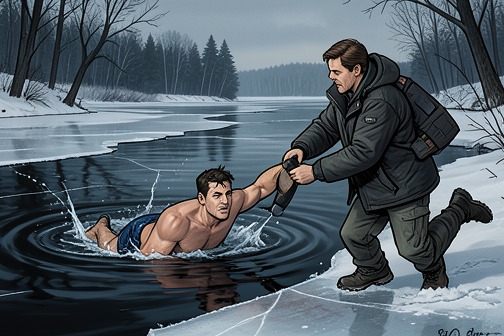
[Poe rescues Isaac from the Mon River ice](entity:event-recall-event-poe-rescues-isaac-from-68a6d6091c3a) after Isaac walks onto the thin surface and falls through. Poe follows him into the water and saves him; years later, while imprisoned, Poe remembers the episode as the best and bravest thing he has done. The rescue gives his loyalty to Isaac a concrete history and helps explain why he accepts legal consequences rather than betray him.
## Background and Circumstances
Poe recalls that he might have been away at [Colgate University](entity:organization-recall-organization-725820f120d8) had he left [Buell](entity:location-recall-location-buell-dd1b10e7bf85). Because he stayed, he was home on the day Isaac walked out onto the thin ice over [the Mon](entity:location-recall-location-4a6bc91fd1c8) River. The possibility that a different choice about college would have kept him from the river gives the rescue its particular weight in Poe’s later reflection: his presence there was contingent, but what he did once Isaac fell was not something he dismisses as mere luck.
Isaac had gone about ten feet onto the ice when it gave way. Poe ran after him and fell through as well. He felt panic, but continued toward Isaac and saved him. The account presents the rescue as an immediate decision under danger, not as a planned act or a display meant for others.
## The Rescue in Poe’s Memory
Poe recalls the episode from prison as he considers what his choices have amounted to. He calls saving Isaac the one brave thing he has done and the best thing he has done. That judgment does not erase his other actions or the consequences he now faces; instead, it establishes a point of moral value against which he measures them. The rescue stands apart from the choices that brought him into custody because it preserved another person’s life.
Poe also describes Isaac as a good person despite the hardship Isaac has endured. In his reasoning, the rescue helps make that judgment personal rather than abstract: he has seen Isaac in danger and acted to keep him alive. The event thus becomes part of the history Poe uses to understand both Isaac and himself.
## Later Consequences and Meaning
The rescue is one part of a continuing bond. After Isaac later changed his mind about taking his own life, he came to Poe. Poe helped warm him and listened as they talked through the night. Remembered alongside the river episode, this later encounter makes their friendship reciprocal: Poe once pulled Isaac from immediate danger, and later offered him company and attention when Isaac was in crisis.
That history informs Poe’s decision to keep faith with Isaac while imprisoned. He recognizes that telling the truth could change his own circumstances, but weighs that possibility against a promise and his belief that Isaac is one of the rare good people. The rescue does not settle the legal question of responsibility for the machine-shop death; it explains why Poe refuses to abandon Isaac when that question threatens to divide them. In Poe’s recollection, the river becomes the moment when staying in Buell acquired a purpose he could still affirm, even as he accepts the consequences of his other choices.
Event 23
Isaac's crisis on the overpass
The supplied passage does not depict Isaac’s crisis on the overpass. It instead shows [Lee](entity:character-recall-character-lee-13e62d55242f) speaking with Joelle and Christy at a bar about staying in [Buell](entity:location-recall-location-buell-dd1b10e7bf85) and the possibility of visiting New York; it gives no details about the overpass event or its outcome.
Event 24
Isaac's flight from Buell
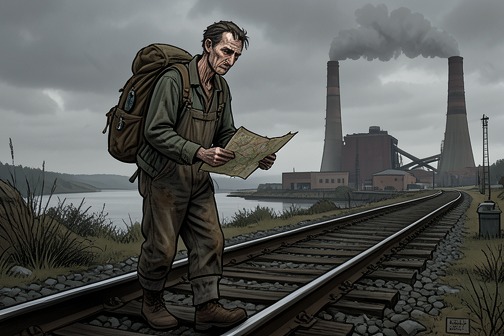
[Isaac English](entity:character-recall-character-isaac-english-4666b5358751)’s flight from [Buell](entity:location-recall-location-buell-dd1b10e7bf85) begins as a planned escape to [California](entity:location-recall-location-7255928c66a8) and ends with a decision to return home. The journey carries him past the coal and steel infrastructure of [the Mon](entity:location-recall-location-4a6bc91fd1c8) Valley and into increasingly uncertain country, where hunger, exposure, and isolation force him to reconsider what escape means. His change of direction does not erase his reasons for leaving; it reveals how the imagined destination gives way to the pull of family and familiar ground.
## Departure and Intended Destination
Isaac has been planning to leave for a month. He avoids being seen by walking the railroad tracks, with [Pittsburgh](entity:location-recall-location-pittsburgh-8a5ce870ed28) as the first objective and California beyond it. He expects to reach the city by following the river, then catch another train west. The plan is practical in outline but also carries an older ambition: he imagines establishing residency in California and applying to study astrophysics, with Lawrence Livermore, Keck Observatory, and the Very Large Array among the institutions and projects that give shape to that future. Even as he rehearses the plan, he questions whether it still makes sense.
The imagined escape is entangled with his family. Isaac remembers his father before the accident that left him an old man, recalling the years when he emerged from the mill and lifted Isaac up. He thinks of his sister, [Lee English](entity:character-recall-character-lee-english-28ee984e607d), who went to [Yale University](entity:location-recall-location-yale-university-f892e4bea2a2) and now has a life in Connecticut that Isaac and their father have not seen. Her departure once seemed like a rising tide that might carry him too; now he recognizes that she has found a place of her own. He also wonders whether [Billy Poe](entity:character-recall-character-billy-poe-3764007934c2) would join him, while expecting that he probably will not. Leaving is therefore not a clean break from Buell so much as an attempt to discover whether a different life remains possible.
Isaac’s notebooks make the journey more than a direct passage between towns. They contain drawings of birds and other animals, and account for a substantial part of the weight he carries. He knows the woods and trails well and uses them to avoid roads and other people. Natural history offers a way to direct a mind he experiences as difficult to control: plants, trees, and birds give him names and particulars to attend to. Yet the same solitude that helps him concentrate also makes the question of whether he is avoiding people harder to ignore.
## The Industrial Route
The river route places Isaac’s private departure against the region’s industrial landscape. He watches barges and a towboat carrying coal, then notices a bluegill in water he understands to be contaminated by mercury and PCBs. People still eat the fish despite the poison. The scene links the valley’s working life to environmental costs that have become ordinary enough to coexist with everyday use of the river.
As Isaac continues, the scale of coal production repeatedly enters his view. Across the river, the West Penn Power station and the larger Elrama power plant burn coal; he recognizes that the clean-looking steam does not make the fuel or its consequences clean. He also passes a mine complex, a coal tipple, loaded railcars, and empty barges. These places are not merely scenery along a route out of town: the transport and power systems that once sustained the region continue to shape the land through which he walks.
Near [Clairton](entity:location-recall-location-efd68062e21e), the coke works dominate the industrial horizon, while nearby streets and houses show the surrounding city’s decline. Isaac notices the contrast between the immense plant and the run-down urban setting. At one point he catches himself repeating a contemptuous place-name learned from his father and stops, unwilling to inherit that judgment unexamined. His attention to the valley’s damage is thus also personal: he is trying to leave without simply carrying his father’s bitterness with him.
## Survival and Moral Limits
Farther from the industrial corridor, the journey becomes a sequence of immediate problems. Isaac walks through woods and fields, rationing water and searching for food. When he senses that he is being followed, he hides beside a trail; a group of stray dogs approaches, and he drives them off with rocks. He questions whether he has been cruel, but also recognizes that they were not simply approaching him for food. The encounter makes the limits of his solitude plain: away from roads and towns, even finding something to eat is uncertain, and avoiding people can leave him exposed to other dangers.
Near a wooden bridge, he stops with little water and an aching stomach, frustrated by the route he has chosen. He admits to himself that he is trying to get away from people, even as his physical needs pull him back toward roads and settlements. After reaching the interstate, he finds a McDonald’s, buys three egg sandwiches, drinks water, and refills his bottle. With only two dollars and eighty cents left, he saves one sandwich and tries to plan for the next day. The small purchase marks a temporary recovery, not security: he remains hungry, short of money, and unsure where he is going.
At a rest stop, Isaac sees an unlocked car with a wallet inside. The treeline is close, and taking it would be easy. He stands there for half a minute, then walks away. His inner argument does not resolve the danger of having too little money, but the choice establishes a boundary: he will not make another person bear the cost of his survival in that moment. He tells himself that he still has money and does not have to eat that day. The decision is precarious rather than triumphant, sustained by the small resources he has left.
## Turning Back
After a long pause on an overpass, Isaac leaves it and continues toward southbound Interstate 75. He brushes dirt from his coat, straightens his shirt, and tries to make himself look like a student rather than a vagrant. The effort to restore his appearance accompanies a renewed attempt to travel: he hitches a ride in a truck and continues moving rather than remaining stranded at the overpass.
Later, after reaching a truck stop on Interstate 70, he buys a meatball sandwich with five dollars given to him by a driver. He initially eats outside, then accepts a ride east with a truck carrying tractor parts. When the driver asks about his journey, Isaac says he has been riding trains and is going home to his family. The account is simpler than his earlier plan to reach California, and its destination has changed. After being dropped near Little Washington, he considers hitching again but decides to continue on foot toward the Mon River and Buell.
The prospect of home becomes concrete through memory. Isaac recalls the three months between [Lee](entity:character-recall-character-lee-13e62d55242f)’s admission to [Yale](entity:organization-recall-organization-c7e83f9fc73d) and [Mary English](entity:character-recall-character-mary-english-7cbedb900f60)’s death, when the family still seemed complete. He remembers them visiting the Carnegie Museum and looking together at dinosaur bones, including his father’s fascination with the discovery. The memory does not make the family’s losses disappear; it gives the return a human center. Isaac estimates that walking home will take a day and a half and accepts the distance because the ground is familiar.
## Significance of the Journey
Isaac’s flight changes direction without becoming a simple homecoming. The California plan draws on his intelligence and former academic hopes, while the actual journey confronts him with depleted money, contaminated industrial waterways, exhausted towns, and the daily calculations of a person without dependable shelter. His observations make the region’s environmental and economic damage part of the route itself, not a separate backdrop to his private crisis.
The decisive turn comes through modest choices rather than a sudden solution: he leaves the overpass, declines to take the wallet, accepts help, tells a driver he is going home, and chooses to walk the familiar route. The journey thus reverses the outward movement with which it began. Isaac does not return because his reasons for leaving have been settled; he returns because the imagined future in California has lost its force beside the people and memories that remain tied to Buell.
Event 25
Billy Poe's imprisonment for Otto's murder
[Billy Poe](entity:character-recall-character-billy-poe-3764007934c2)’s imprisonment for [Otto](entity:character-recall-character-otto-b03057fe2235)’s murder places him at the center of a choice with consequences for both his own freedom and Isaac’s: disclose who killed Otto, or preserve the silence that keeps the charge pointed at himself. The prison does not resolve that choice. It intensifies it, until a later development in the case offers the prospect that Poe may be released without exposing Isaac.
## Background and Legal Stakes
The fatal incident’s immediate aftermath is framed by the need to get to a phone and call 911 for the injured man. The speakers anticipate that an ambulance will bring the police close behind. In this account, seeking emergency help and drawing law enforcement into the matter are linked from the outset; the events that follow unfold under the pressure of what can be established and who might be held responsible.
Harris sees a possible legal path for Poe if Poe will tell him what happened and identify everyone else who was in the plant. He presents cooperation as a way to make the case one of self-defense at trial, warning that a jury might otherwise see only that Poe killed a man and fled. The proposal is therefore both protection and a demand for disclosure: Harris offers a defense, but its success depends on Poe giving an account that implicates someone else.
Harris’s concern is complicated by his own conduct. After hiding a jacket that belonged to Poe, he finds himself nervous when sitting with [Steve Ho](entity:character-recall-character-steve-ho-ffa9cbb41157). He says to himself that the concealment bothers him less than the jacket’s connection to Billy. His reasoning draws on an informal community understanding that people are not arrested for every minor offense and that doing right sometimes involves letting people go. The hidden jacket makes that discretionary code concrete: Harris is already acting outside ordinary enforcement, while worrying about what his choice means for Poe.
## Prison Pressure and Poe’s Refusal
In prison, Poe treats not giving in as a limited success, not a settled resolution. He has resisted a further chance to cooperate, but doubts he can refuse again. His uncertainty is sharpened by the conditions around him: a guard passes other inmates who call out, and a prisoner on the block has been shouting for help for two days without response. These details place Poe’s decision inside an environment where attention and assistance cannot be assumed.
Poe understands the choice as a contest between his own future and Isaac’s. If he tells a lawyer who really killed Otto, he expects the information to pass to the district attorney, and Isaac could then face the situation that Poe now occupies. At the same time, Poe considers whether Isaac might be better able to cope with prison than he is. The thought does not settle the question; it makes betrayal seem possible even as fear weighs against it. In Poe’s private reckoning, the decision is not abstract loyalty but a choice about which of them will bear the consequences.
His immediate outcome is to hold his ground, yet he cannot regard that outcome as secure. Poe expects that leaving isolation will bring a confrontation with [Clovis](entity:character-recall-character-clovis-92ff17cdbc2a) and others. He imagines the matter eventually forcing a choice between a weapon and a lawyer, and recognizes that either route could end the silence. The passage thus makes imprisonment more than the consequence of the charge: it becomes the setting in which Poe’s refusal is repeatedly tested and where he anticipates further danger.
## Family and Divided Loyalties
Poe later tells [Lee](entity:character-recall-character-lee-13e62d55242f) that he had nearly frozen in his yard because he could not face his mother after what had happened. Lee listens, but his disclosure changes how she understands the situation. She concludes that both men will need lawyers and that they are no longer on the same side: Isaac and her father stand against Poe in the legal conflict as she sees it. Her reflection on cooperation and noncooperation gives the dilemma the shape of a strategic problem, but the practical stakes are personal. The checkbook she has brought home, shared with [Simon](entity:character-recall-character-simon-99ba1396ec7a), is tied to the immediate need to pay for a nurse and repairs to the house; legal help must compete with other obligations.
This scene shows the charge spreading beyond Poe and Isaac. Lee is drawn into the consequences not as a detached observer but as someone weighing family ties, legal representation, and household needs. Poe’s account of his distress reaches her, but it does not erase the conflict between the two men. Her understanding of the case becomes another measure of how silence can protect one person while dividing the people around him.
## Later Developments and Significance
When Harris speaks with Isaac later, he explains that Poe was charged with killing the man and that the charge was murder. Isaac asks whether Poe said anything, making clear that Poe’s silence remains central to the danger. Harris then tells him that new developments appear likely to require Poe’s release. He adds that authorities have not heard of Isaac and doubts Poe will identify him, especially once Poe’s lawyer learns of the developments. Harris intends to contact the lawyer after speaking with Isaac.
The account does not specify what those developments are, nor does it establish that Poe has already been released. It does, however, alter the apparent direction of the case: Poe may no longer have to choose between continued imprisonment and exposing Isaac. The uncertainty is significant. His refusal has preserved Isaac’s anonymity up to this point, but the prospect of release arises from information outside the details given here, not from a clear legal resolution described on the page.
The imprisonment therefore binds legal guilt to a more unsettled moral question. Harris seeks a defensible account; Lee sees opposing sides forming; and Poe weighs whether loyalty can survive the cost of keeping quiet. The later possibility of release loosens the immediate pressure without undoing the choices made under it. Poe’s silence is neither presented as an easy victory nor shown to settle what responsibility requires.
Event 26
Poe's prison stabbing
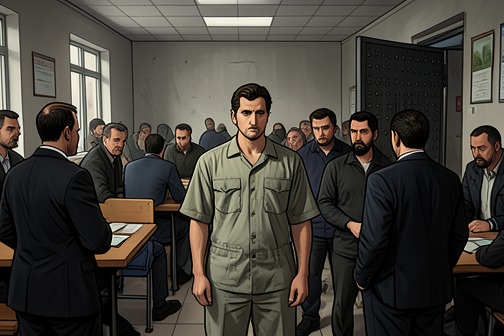
[Billy Poe](entity:character-recall-character-billy-poe-3764007934c2)’s prison stabbing turns his loyalty to [Isaac English](entity:character-recall-character-isaac-english-4666b5358751) into an immediate physical danger inside a prison governed not only by guards but also by inmate factions and their informal rules. After Poe refuses to identify Isaac, he is left to face the consequences of that choice within the general population.
## Prison Conditions and the Threat
The prison’s routines offer little sense of safety. In the cafeteria, inmates gather at long tables in areas divided by race, while [Clovis](entity:character-recall-character-clovis-92ff17cdbc2a) and other influential men occupy a visible position among the white prisoners. Earlier, [Black Larry](entity:character-recall-character-black-larry-d00928b0b31a) had warned that Poe would need to keep his head down until a matter involving the DCs was settled. The advice establishes that Poe’s safety depends on factional arrangements as much as on official custody; his refusal to follow an intimidating group back to a cell also makes clear that he will not accept protection without understanding its terms.
After asking for protective custody, Poe is moved again, but he doubts that the transfer will keep him safe. He considers a weapon and weighs escape against returning to the general population, while telling himself that protecting Isaac is the reason he is in prison. When he hears guards approaching, he briefly expects to be taken somewhere secure; they pass his cell instead. Poe then leaves to get food, but at the cafeteria he sees Clovis with [Dwayne](entity:character-recall-character-dwayne-c0b4ffb07a6c) and the younger men. Clovis rises, and Poe turns away, moving through the corridors toward the rec-yard doors. The doors are locked. Clovis and several associates catch up with him there, closing off the route he had hoped might lead out.
## The Attack and Its Immediate Aftermath
Clovis and his companions overtake Poe at the locked doors. One of the group has a long-bladed knife, and when Poe tries to break past them, they bring him down and stab him. The attack ends his attempt to escape the confrontation, but not his effort to protect Isaac: Poe has already understood the choice as one between himself and his friend, and he has resolved to endure the consequences rather than betray him.
Poe survives, though his first moments afterward are confused and frightening. He drifts in and out of awareness as rescuers treat him, then comes to in a hospital bed with his head bandaged, an intravenous line beside him, and a handcuff securing him to the bedrail. Pain limits his movement, but the recognition that he is alive marks a decisive turn from the apparent finality of the attack. The danger has not erased his commitment to Isaac; it has made the cost of that commitment unmistakable.
## Secrecy After the Attack
After Isaac visits the police station, Harris watches him leave without telling him that Billy Poe has been stabbed and nearly died. Poe had also refused to see his lawyer for several days. [Grace](entity:character-recall-character-grace-f21f0fdf609d) has not yet been told either, leaving both people closest to Poe outside the immediate truth of his condition. Harris, meanwhile, must prepare an account of where he was the previous night while coping with his own injuries. [Ho](entity:character-recall-character-ho-2a9779c521a8) had stayed on duty through the night, sensing that something was happening. Harris’s silence makes the stabbing part of a wider pattern of concealed knowledge, even as he recognizes that both young men are worth saving.
## Earlier Violence and the Cost of Survival
The prison attack followed an earlier assault at the machine shop, where Billy Poe had been threatened and injured while Isaac English killed [Otto](entity:character-recall-character-otto-b03057fe2235) to protect him. In the immediate aftermath, Poe walked home without his jacket in freezing weather, fixated on the violence and blaming himself for having started the confrontation. He also worried that he had failed to prepare firewood for his mother, whose arthritis kept her from chopping it herself. Fear, anger, guilt, and concern for her thus converged before his imprisonment began; surviving one violent encounter did not leave him untouched by it.
At home, Poe’s mother found him cold and emotionally distant. She put him in a bath, warmed him, and cleaned his wounds, recognizing that she had misjudged how much support he needed after losing his hardware-store job. He let her remove his shirt but would not let her take off his jeans. The scene establishes a boundary he could still assert amid shock and dependence. In prison, the later stabbing again leaves his body subject to other people’s decisions, while his recovery is rendered through intermittent awareness and confinement to a hospital bed. His survival is therefore not a simple return to safety: it follows two successive episodes of violence, with care offered at home and medical treatment after the prison attack providing distinct, limited forms of protection.
Event 27
Bud Harris kills Murray Clark
[Bud Harris](entity:character-recall-character-bud-harris-4c14453c3d06)’s killing of [Murray Clark](entity:character-recall-character-murray-clark-e2a8f4138f15) grows out of a conflict between protecting [Billy Poe](entity:character-recall-character-billy-poe-3764007934c2) and allowing the legal case against him to proceed. [Grace Poe](entity:character-recall-character-grace-poe-38cb7d239774) silently accepts the possibility that Harris will kill the witness, while Harris approaches Murray believing that he can frighten him into leaving the Valley. The encounter ends with Murray dead and Harris himself under attack.
## Background and Stakes
After leaving Grace Poe’s house, Harris goes directly to the police station, weighing the danger of intervening against the prospect of Billy standing trial. He considers Murray a poor witness before a jury because he is a drunk, but recognizes that any harm to him would prompt the district attorney to investigate intensely. The choice is not simply whether Billy might be convicted: Harris understands that acting against the witness could place both himself and Billy in prison.
Murray remains in the area because Carzano is paying him one hundred dollars a week in state funds under the label of witness protection, although the arrangement does not actually protect him. Harris reasons that Murray will stay as long as the payments continue unless someone makes him believe he is unsafe. To Harris, that means making an impression strong enough to drive him away; the plan sets the immediate terms of the confrontation.
[Grace](entity:character-recall-character-grace-f21f0fdf609d)’s private deliberation establishes the emotional pressure behind Harris’s decision. She has not eaten for two days and sits outside, repeatedly considering whether to call Harris and ask him not to act. Each time, she imagines Billy dead and cannot bring herself to make the call. She wants Murray dead because his testimony threatens her son, while recognizing that Murray may have truthfully reported what Billy did. Grace also understands that silence is not neutral: although she has not directly asked Harris to kill Murray, she knows she is accepting his decision and sharing responsibility for what follows.
## The Confrontation and Its Outcome
Harris finds Murray and points his revolver at him, telling him to leave the Valley. Murray says he will go, but makes a sudden movement; sensing someone behind him and believing he must either turn or fire, Harris shoots. A person then tackles Harris and tries to take his gun. Harris is unable to stop the struggle immediately, and his hand is injured; the available account does not identify the attacker.
In the darkness outside, Harris searches with a flashlight and spots Murray moving through brush roughly twenty to twenty-five yards away. Murray freezes when the light reaches him. Harris fires twice, then catches up with him in the tall grass. Murray is no longer moving. The encounter has turned Harris’s attempt to frighten a witness into a killing, with the attack on Harris adding a second, unresolved act of violence to the scene.
## Harris’s Discretion and the Moral Threshold
Before confronting Murray, Harris had already been weighing whether to protect Billy through police discretion. He had hidden the jacket that belonged to Billy and, sitting with [Steve Ho](entity:character-recall-character-steve-ho-ffa9cbb41157), found himself more troubled by that connection than by the act of hiding it. Harris understood such choices through an informal community compact: people were not arrested for every offense, and doing right sometimes meant stopping someone, sometimes letting them go. Yet another voice in his mind insisted he should get out of the truck, find the jacket, and arrest Billy. He chose to wait and see which judgment proved right. The later encounter with Murray marks a sharp escalation from that divided restraint: Harris no longer merely delays enforcement but directly intervenes against a witness.
That shift gives the killing its particular moral weight. Harris initially approaches Murray intending to frighten him into leaving, but the effort to protect Billy crosses into lethal action, while Grace’s silence has already made clear that private loyalty can carry responsibility even without an explicit request. The scene leaves Harris alive but shaken, unable to holster his weapon after he finds Murray motionless. His earlier language of balance and discretion cannot contain what he has done: the choice he once treated as a question of when to enforce the law has become an irreversible act against the person whose testimony threatened Billy.
## The Town’s Strained Institutions
The killing takes place amid mounting pressure on [Buell](entity:location-recall-location-buell-dd1b10e7bf85)’s already limited public institutions. The city’s new budget cut the police allocation from $785,000 to $541,000, the largest reduction in the department’s history; training would be curtailed, aging vehicles kept in service, and three full-time officers laid off—nearly the entire staff. At the same time, the city faced crumbling infrastructure and an order to repair a sewer system that spilled sewage into [the Mon](entity:location-recall-location-4a6bc91fd1c8) during heavy storms. These conditions do not explain or excuse Harris’s decision, but they place his personal exercise of authority in a town where formal capacity was shrinking and civic problems were accumulating. The contrast sharpens the episode’s stakes: a witness’s safety and a murder investigation depend on choices made within institutions under strain, while Harris’s intervention turns public responsibility into private violence.
Event 28
Isaac returns and tries to confess to Harris
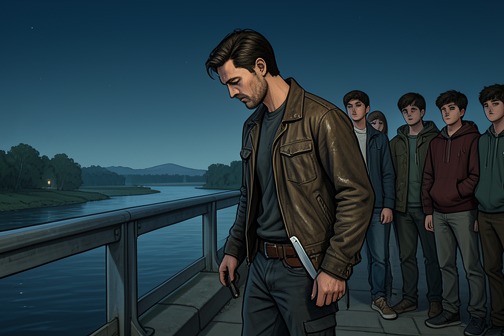
[Isaac English](entity:character-recall-character-isaac-english-4666b5358751)’s return to [Buell](entity:location-recall-location-buell-dd1b10e7bf85) becomes an attempted confession that [Bud Harris](entity:character-recall-character-bud-harris-4c14453c3d06) deliberately interrupts. Isaac comes back prepared to tell the truth about the machine-shop events and to accept their consequences, but Harris makes clear that further disclosure could expose the few people still alive who know what happened. Isaac leaves without giving the full account, choosing instead to trust Harris and go away again.
## The return and the decision to speak
After walking nearly twenty miles from Little Washington to Speers, Isaac has only eight miles left to Buell. At night he stands on the I-70 bridge looking over [the Mon](entity:location-recall-location-4a6bc91fd1c8) River, then descends toward the train tracks. A group of teenagers beneath the highway falls quiet as he passes; he realizes they have noticed the hunting knife at his belt. Once out of sight, he removes it and throws it into the river. The gesture accompanies a decision to stop living by an older, violent code: rather than let circumstances make his next choice for him, he understands continuing to live as a choice renewed one step at a time.
Isaac keeps walking south beneath a clear night sky, reflecting on the stars and on the transformations by which matter passes between earth, human life, and the natural world. He feels something leaving him, as though he were stepping out of a skin. South of Naomi, with only a few miles remaining for the morning, he stops beside the river. He cannot simply go home, he thinks, because those close to him might persuade him not to do what he believes is right. He gives his father credit for having tried, and resolves to tell Harris what he did. The riverbank is a pause before accountability: Isaac expects that his last night of freedom is ending, but he has not yet learned what Harris will do with his confession.
## The attempted confession
When Isaac enters the Buell police station, [Ho](entity:character-recall-character-ho-2a9779c521a8), the officer who had been present when Isaac and [Billy Poe](entity:character-recall-character-billy-poe-3764007934c2) were caught at the machine shop, is behind the desk. Isaac asks to speak to Harris and is told that the chief is unavailable. He goes down the hall anyway, knocks at Harris’s door, then opens it before receiving an answer. The room’s wood furniture, leather, and paintings contrast with the police station’s cinderblock walls and fluorescent lighting. Harris is on a couch beneath a blanket, pale and disheveled, with one hand supported in a splint.
Isaac tells Harris he is turning himself in. Harris stops him before he can continue, checks the hall, and locks the door. In private, Isaac begins with the central fact he has come to disclose: Billy Poe did not kill the homeless man. Harris reacts as if struck by the statement, closes his eyes, and asks Isaac not to say anything more. Isaac insists that he is telling the truth; Harris answers that he is not. When Isaac starts to explain what happened between himself and Billy, Harris leans across and covers his mouth with a hand. The exchange turns the intended confession into a struggle over whether the story will be told at all.
## What Harris reveals
Harris explains that the district attorney has just informed him that the two men who were with Isaac and Billy at the factory have been found dead. He stresses that the three men from that night are now all gone, leaving only Isaac and Billy alive to connect the events. When Isaac asks what happened to them, Harris says it could have been anything. His response does not establish how the men died; instead, it exposes the danger of Isaac’s continuing. The confession he came to make would not simply identify his own role. It could also place Billy and the remaining witnesses under renewed scrutiny.
Isaac’s return therefore brings two kinds of truth into the room: his own account of Billy’s innocence and Harris’s news that the other men are dead. Harris does not invite a fuller explanation or ask Isaac to provide evidence. His urgent interruption, locked door, and warning about the surviving witnesses make the limits of the conversation unmistakable. The scene leaves the facts of the deaths unresolved while showing that Harris wants Isaac to understand the consequences of speaking further.
## Leaving Buell again
Isaac tells Harris he is going to leave town and thinks he should live with his sister in Connecticut. He is surprised by his own decision, but it feels right to him. He also asks what will happen to Billy. Harris estimates that the authorities will probably have no choice but to release him after about a month. He offers Isaac both his cell and home numbers and says he will meet him if Isaac begins to feel troubled by what happened. Isaac declines the offer as something he does not think he will need.
Harris nevertheless tells Isaac that he did the right thing by coming in, and says he wishes he could offer him something in return. He ends the meeting by sending Isaac home. The exchange gives Isaac neither absolution nor a completed confession. Instead, it leaves him with a possible future for Billy, an invitation to seek Harris again, and Harris’s acknowledgment that returning to tell the truth took unusual courage.
## Trust as the unresolved ending
Isaac walks out of the office, down the steps, and onto the road toward town. Halfway through Buell, near the river, he recognizes that he has decided to trust Harris and the others, and to see how that decision turns out. This is a change from the solitary resolve that brought him back: he had expected to disclose everything and face what followed, but now accepts a future that depends partly on other people’s discretion.
He crosses the old railroad and stands among reeds on the riverbank. His mind is quiet as he watches sunlight on the slow water, touches the river, and sees terns heading toward open water. The movement suggests departure without settling whether he will return. Harris watches him leave and wonders whether he can keep quiet; even after Isaac is gone, the outcome remains uncertain. The event closes not with legal resolution but with a choice between disclosure and loyalty, and with Isaac trusting Harris while preparing once more to leave Buell.